Bink
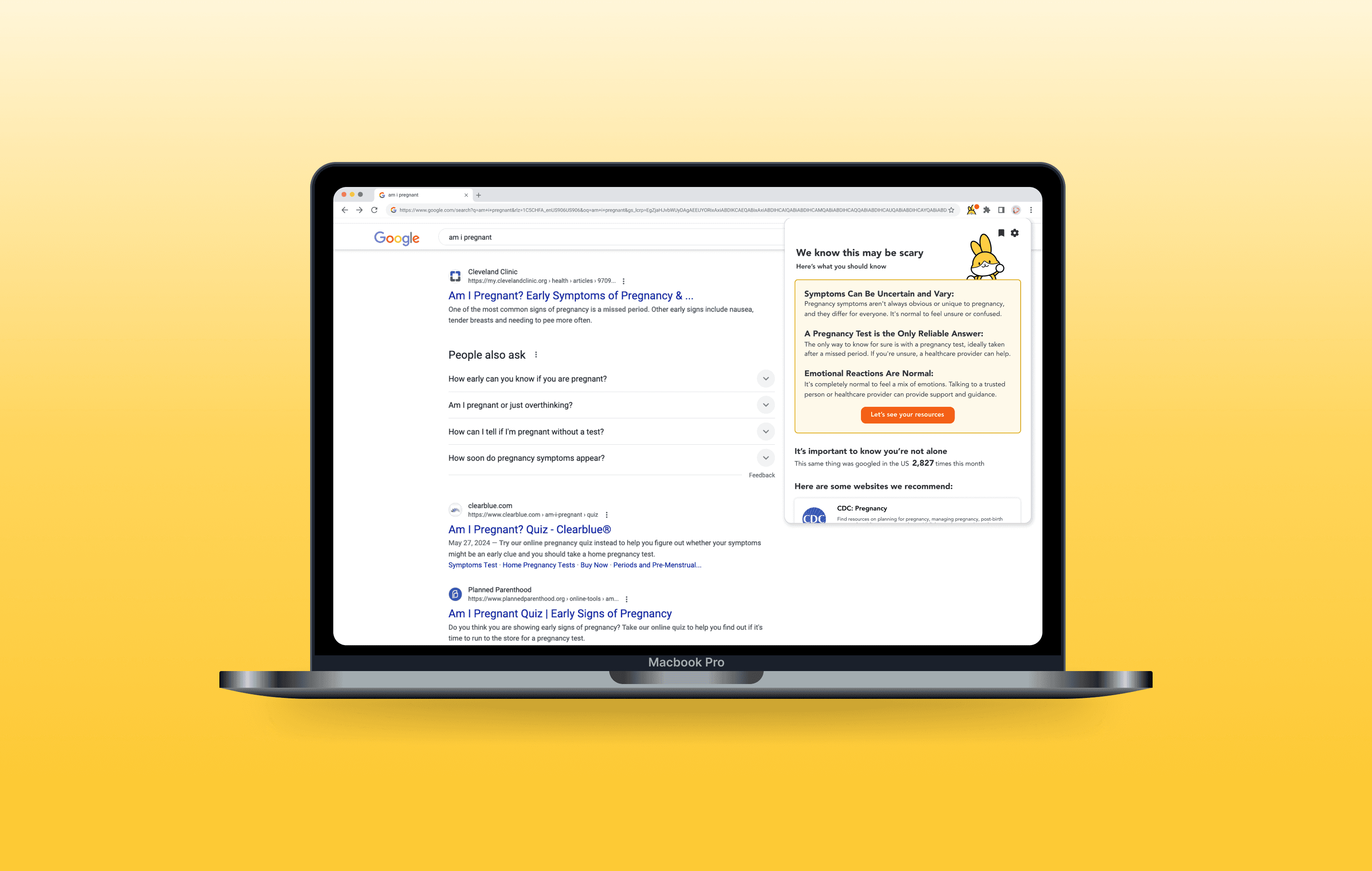
Teens lack access to comprehensive, unbiased sexual health education. When looking for information, most turn to Google, where information can be overwhelming, confusing, or biased. Privacy, stigma, and cultural context make this space especially sensitive.
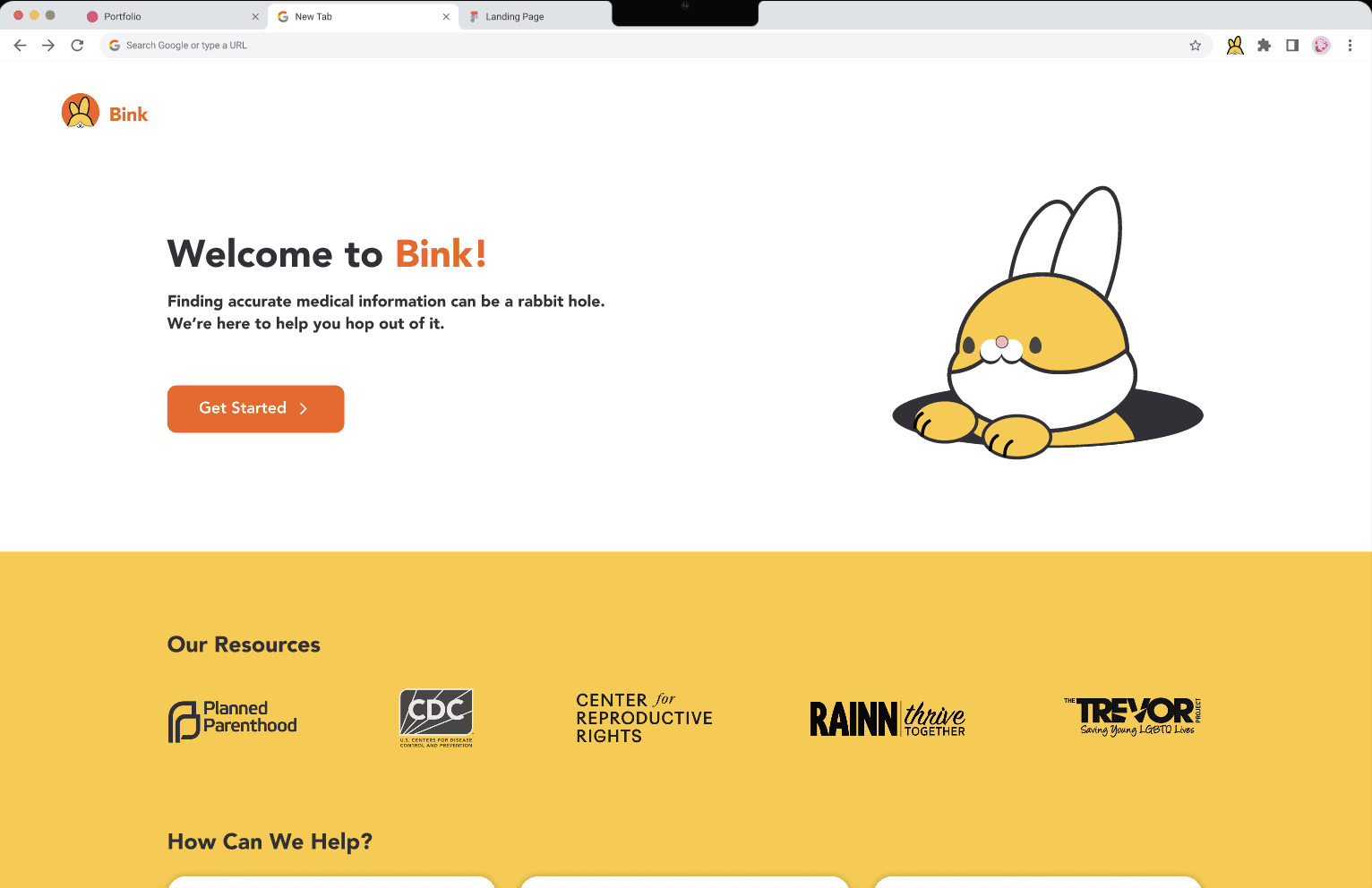
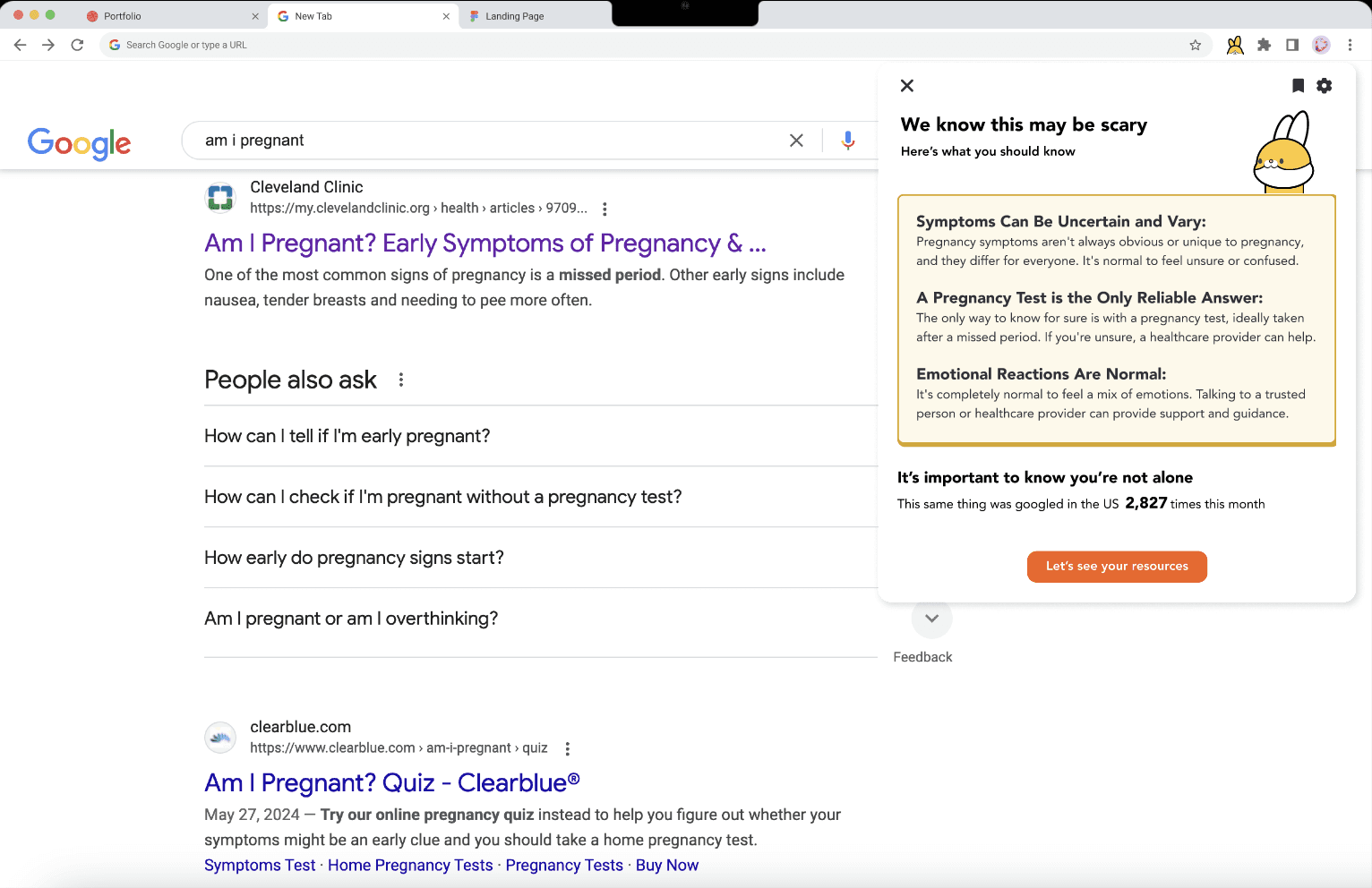
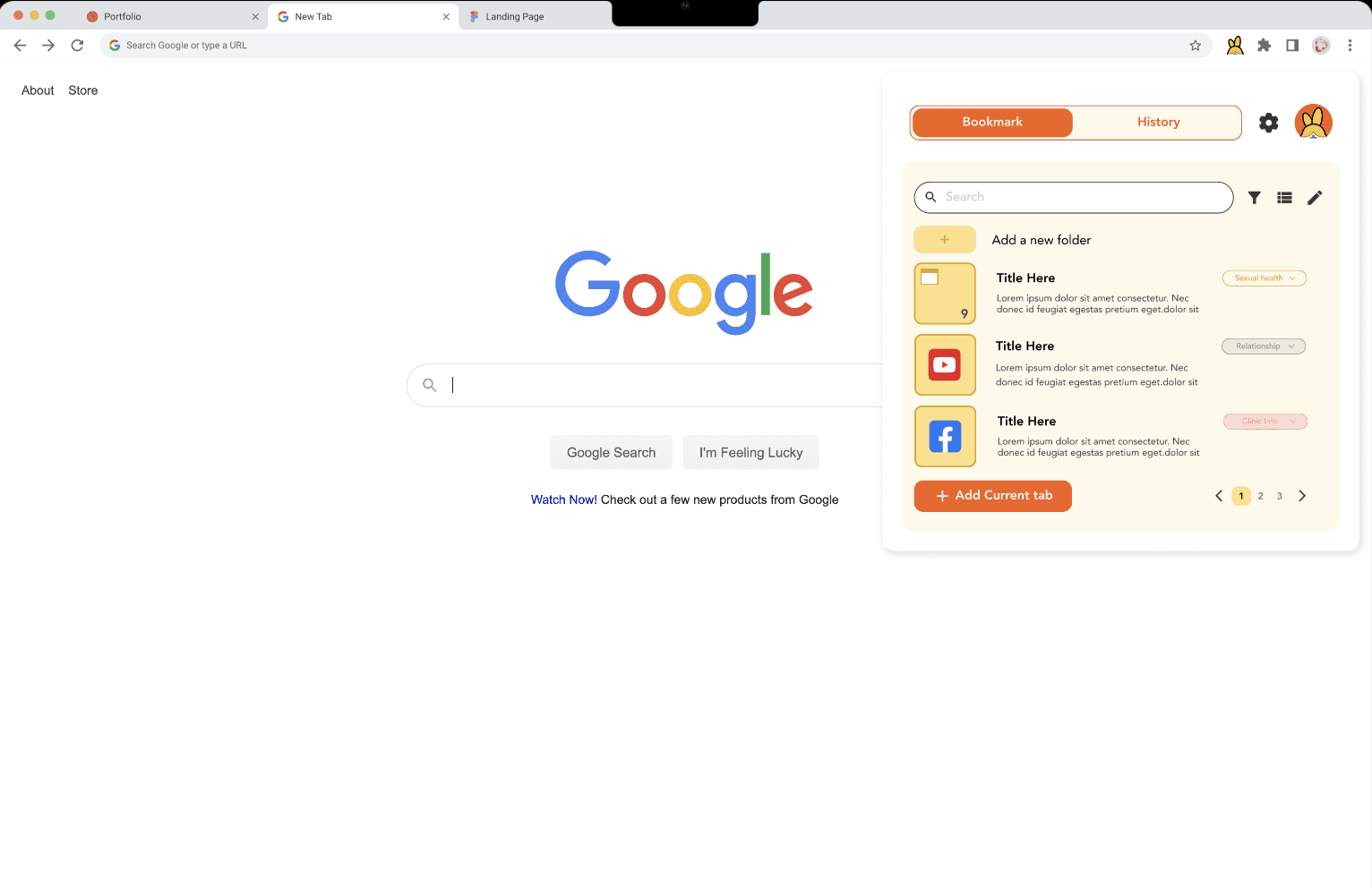
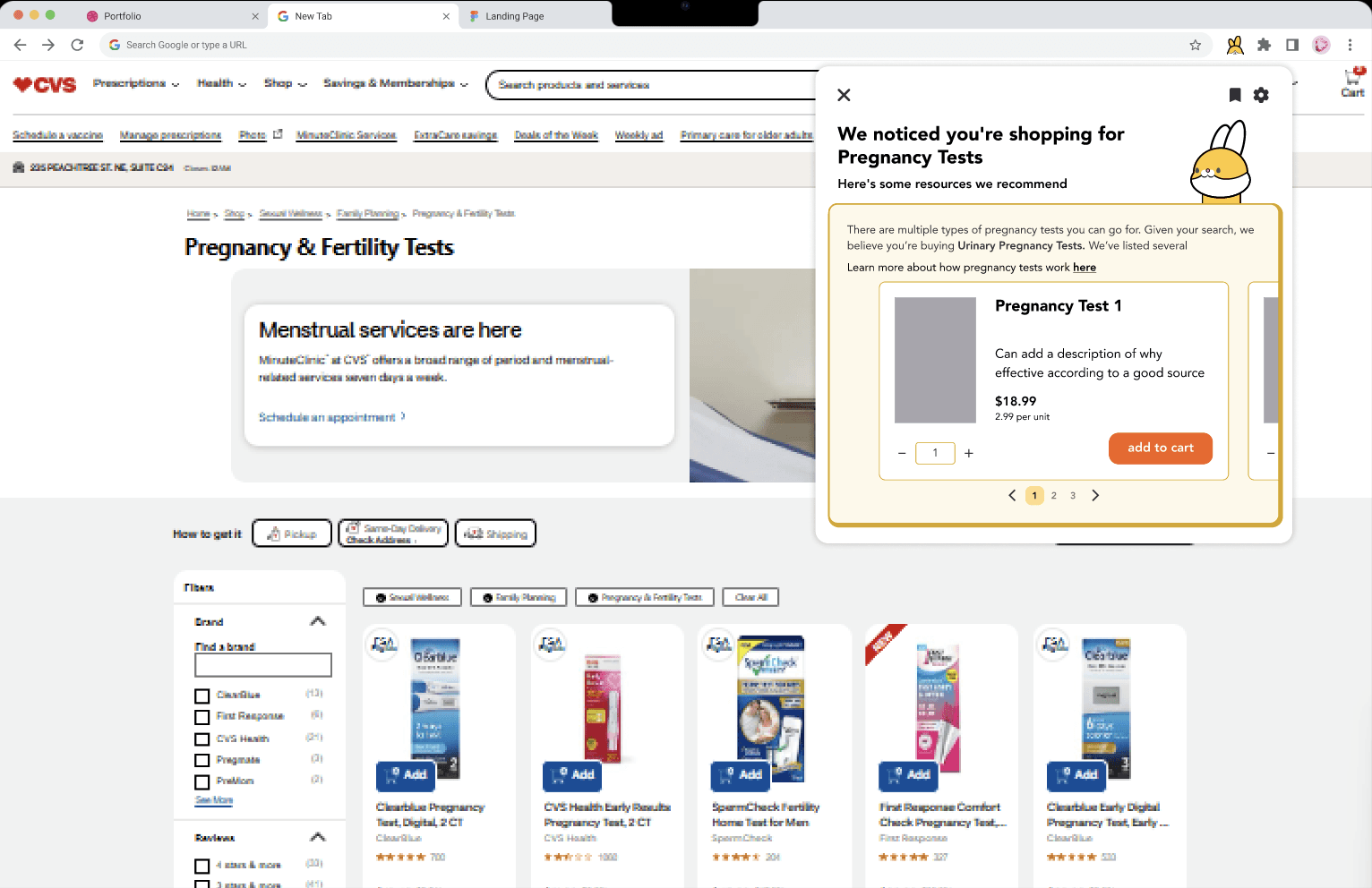
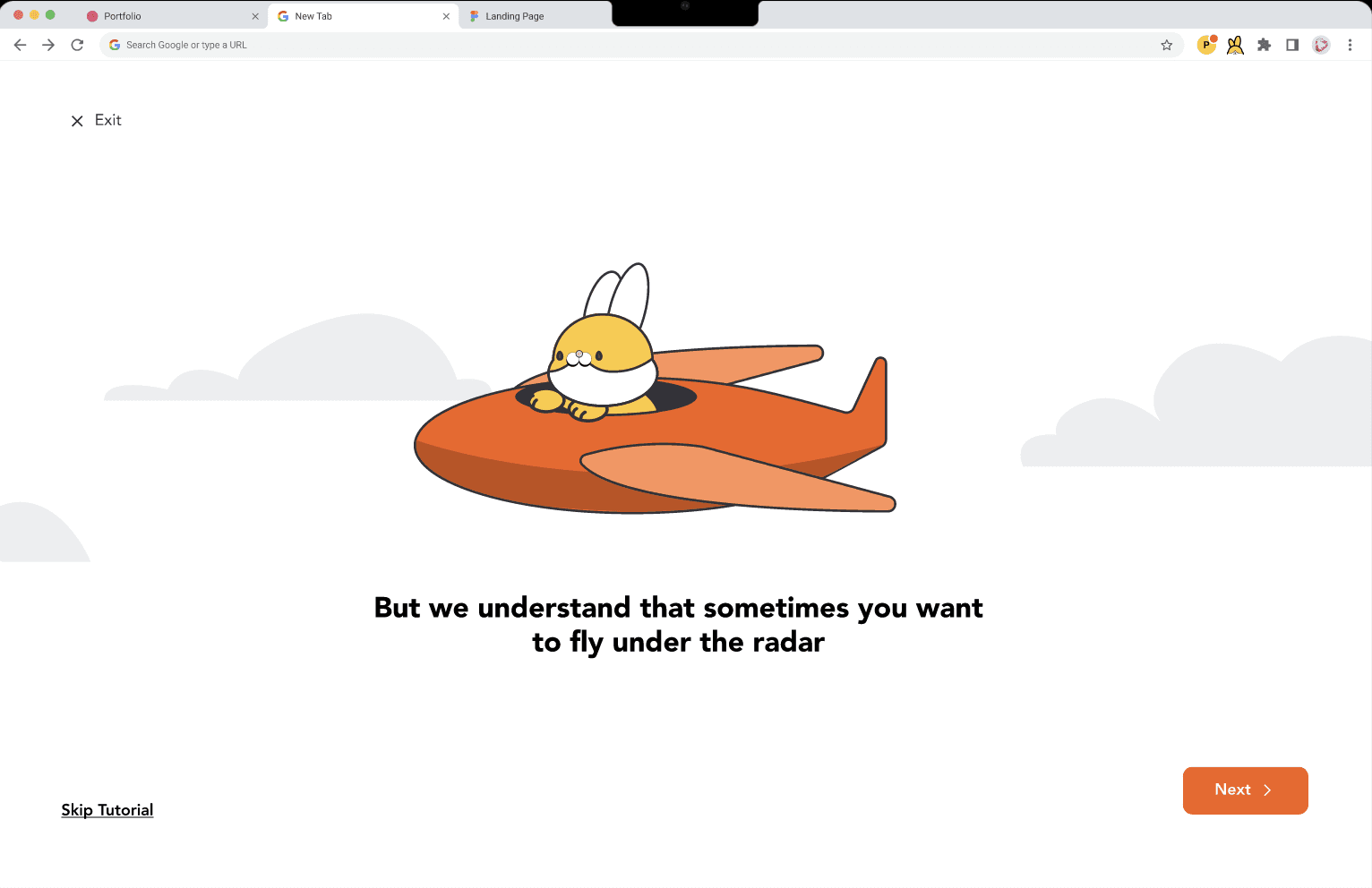
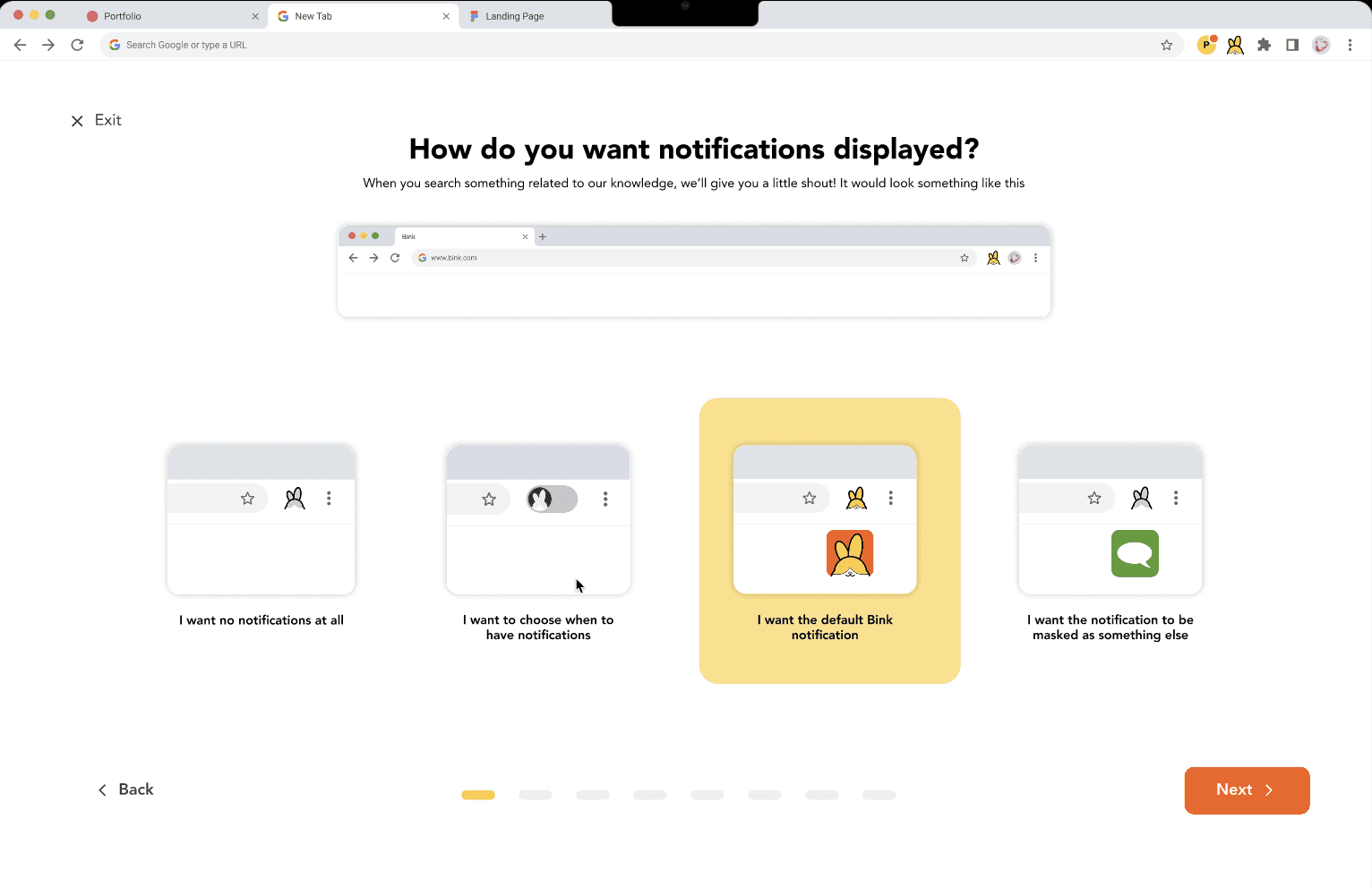
This project explores how digital tools can better support teens seeking reproductive health information online. Designed for adolescents navigating sensitive topics privately, the work focuses on meeting users at the moment they search for answers—where confusion, misinformation, and stigma are most present. We designed Bink, a Chrome extension that integrates directly into Google search and web browsing to help teens evaluate credibility, access trustworthy resources, and build confidence in their health decisions through a non-judgmental, inclusive, and privacy-first experience.
How might we support teens in navigating online reproductive health information without increasing fear, stigma, or misinformation?
Surveys
We surveyed 30 teens from Georgia to understand how they seek sexual health information and what topics matter most to them.
INFORMATION SOURCES
70% of our participants cited social media and online resources as their primary form of sex education.
PRIORITIES
Interpersonal Violence and Consent were the topics teens ranked highest in priority for education.
GENDER DIFFERENCES
Half of our female participants reported feeling significant pressure and stigma around sexual health topics while no male participants reported that. Male participants also reported feeling more confident in their education than females.
Interviews
We conducted 6 semi-structured interviews with educators and young adults to explore gaps in sexual health education, evolving teen needs, and barriers to accessing care.
KNOWLEDGE GAPS
There is a large gap in reproductive health literacy between teens–– impacting teens differently as they navigate through life.
INFORMATION SOURCES
Most teens find their reproductive health information through social media or online.
EXPOSURE
Teens that we’re introduced to sex ed at a young age felt less stigma and shame associated with reproductive health.
EAGER TO LEARN
Most student want to learn, they just don’t always have the resources to do so.
Competitive Analysis
We analyzed 8 existing menstrual cycle tracking apps, intimacy apps, teen matters, planned parenthood, telehealth, and safety-focused products to understand current patterns, gaps, and user expectations.



FREE ACCESS
Paid features create separation between the user and the product.
PRIVACY
Privacy is an extremely valued feature.
SINGLE-PURPOSE
For many users, product engagement is usually dependent on one feature, and there’s little exploration of other features.
Hierarchical Task Analysis
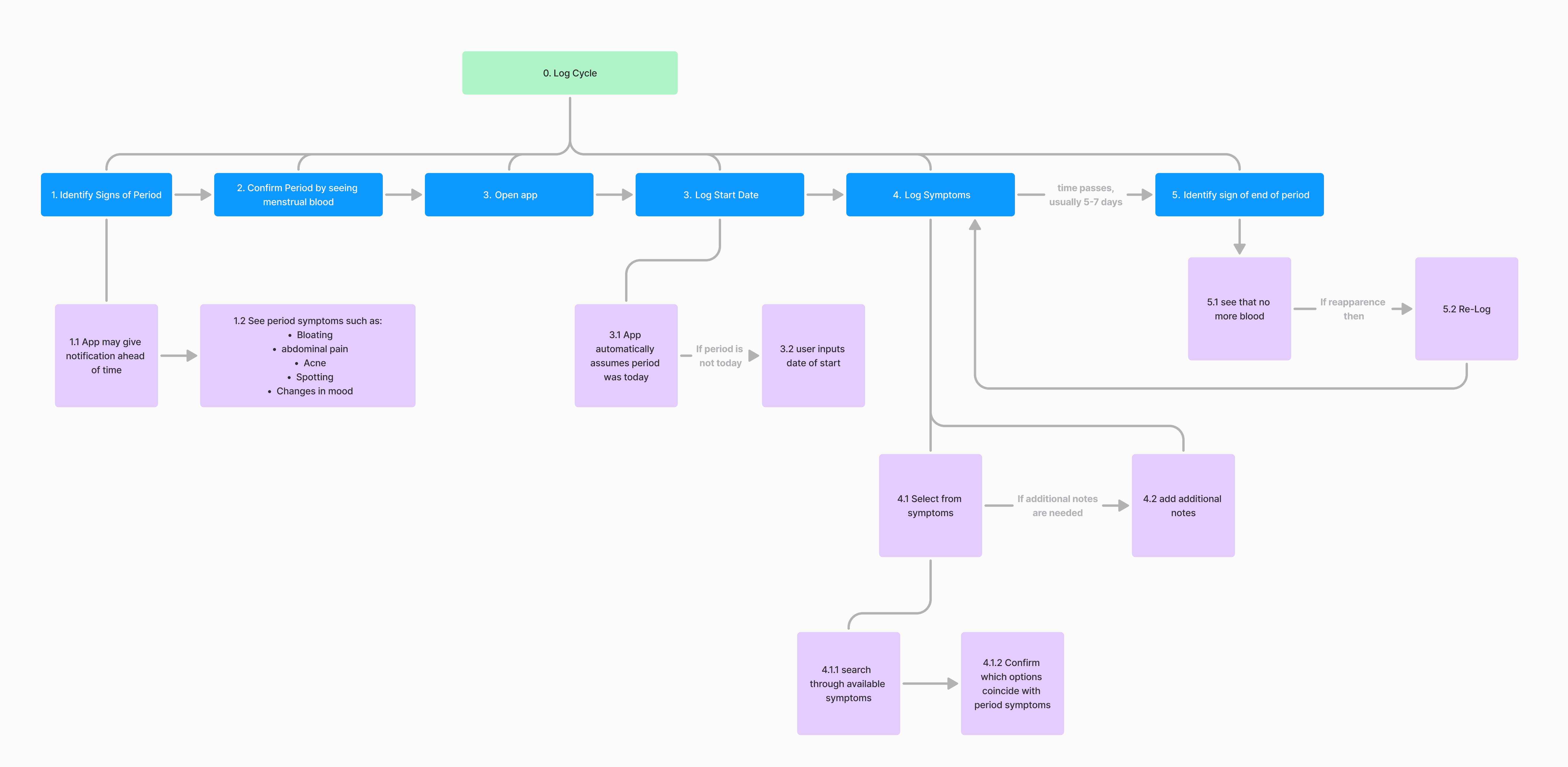
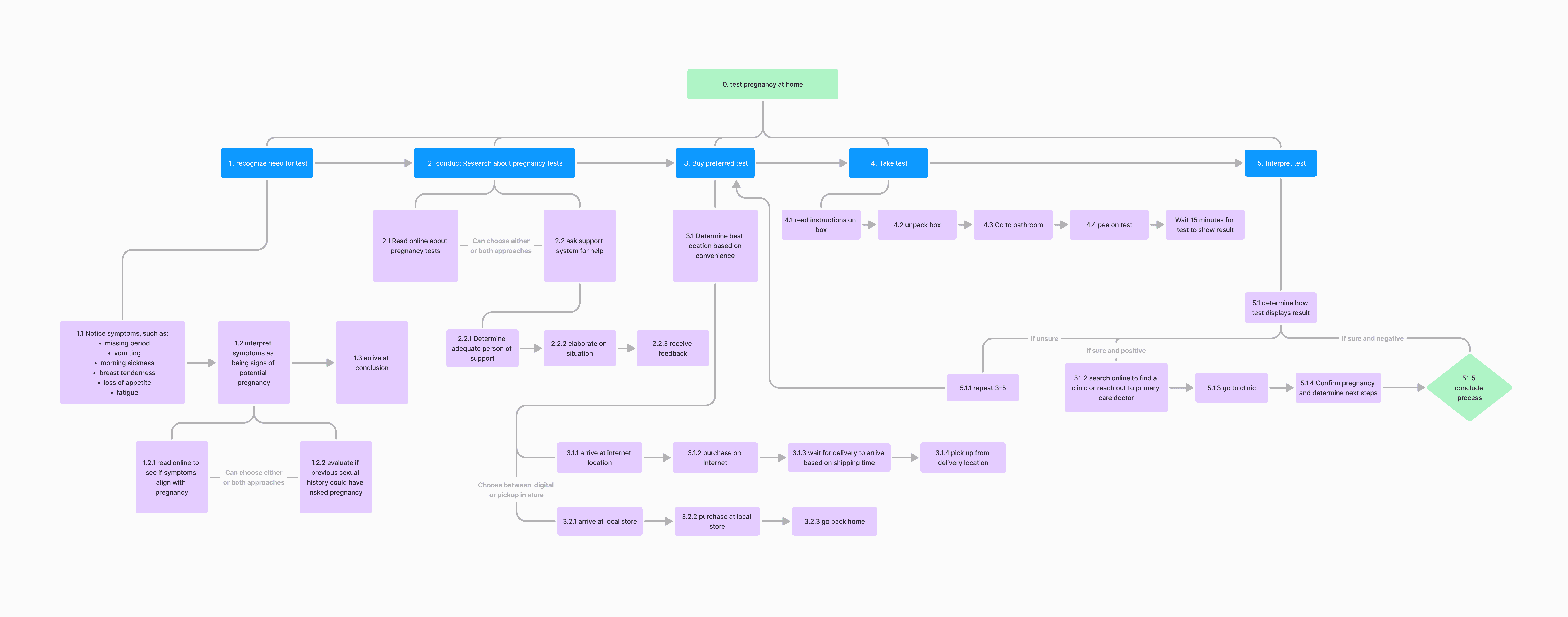
We conducted 2 Hierarchical Task Analysis to understand how teens would (1) track a period and (2) identify a pregnancy at home. Multiple contexts were considered, including access to resources, knowledge and literacy, cultural/social norms, emotional state, and time sensitivity.
Logging a Cycle
KNOWLEDGE GAPS
Both HTAs reveal gaps in knowledge, whether it's about pregnancy symptoms or menstrual tracking. This highlights the need for easily accessible educational tools to help teens make informed decisions.
CONTEXTUAL SENSITIVITY
Emotional state, privacy concerns, and access to resources heavily influence both tasks. It’s essential to consider how these factors affect decision-making and task completion.
Social environments and cultural norms significantly impact users’ comfort levels in managing sensitive health tasks, requiring an approach that fosters privacy and inclusion.
Ensuring that the app provides not only tracking but also educational information with clear guidance, especially for those with limited health literacy.
The design should provide non-judgmental access to services and present information in a way that doesn’t stigmatize the topic area.
Social and cultural sensitivity is important because different cultures view reproductive health differently.
The design should include a variety of topics, addressing what teens prioritize and want to know more about.
Privacy and confidentiality should be prioritized.
Design should feel intuitive and understandable.
Inclusivity for those who have a robust sexual education background and those who don’t know very much.
LGBTQ+ youth, youth of color, and youth from low-income families face additional barriers to accessing care. Also, not everyone with a menstrual cycle identifies as a woman, so gender neutral branding/ language is important.
Consider the role of parents, school educators, and partners. Based on survey, interviews, and D1 research.
The design should address users in a variety of stages of life– such as pregnancy, period tracking, sexual health, etc.
Ideation
Using brainstorming strategies like S.C.A.M.P.E.R., worst possible idea, and others, our team sketched our top 10 ideas so we could begin gathering feedback.

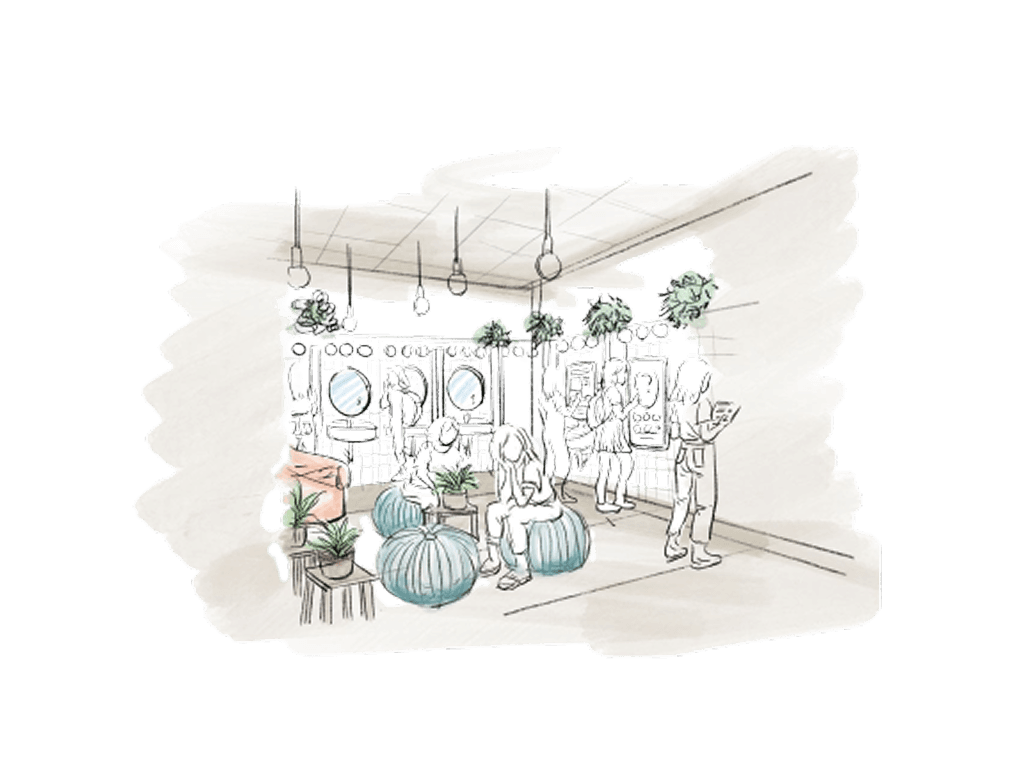
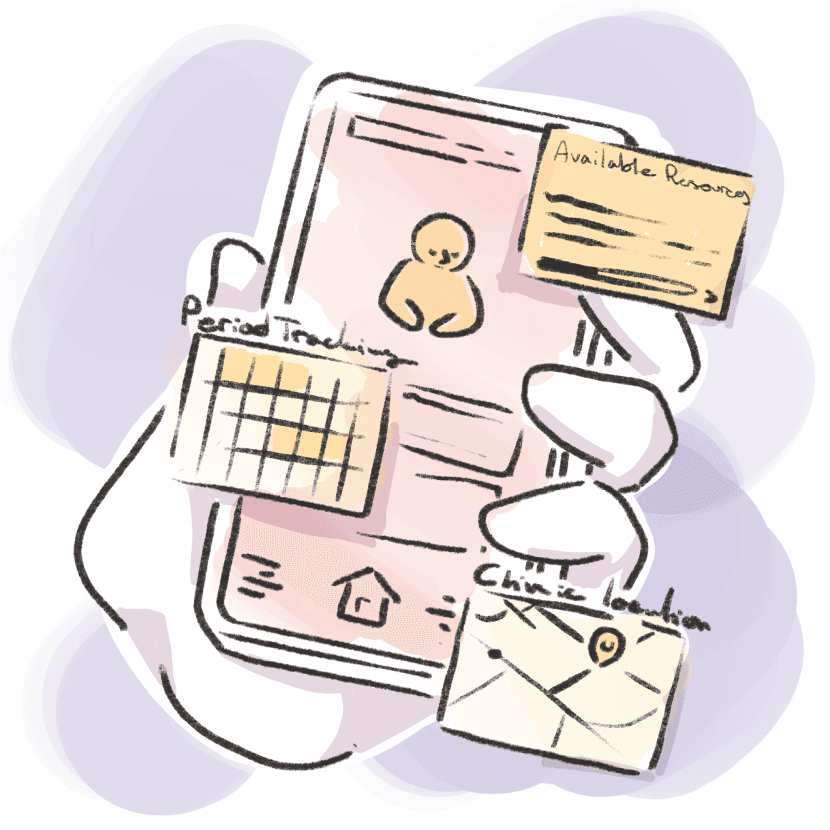
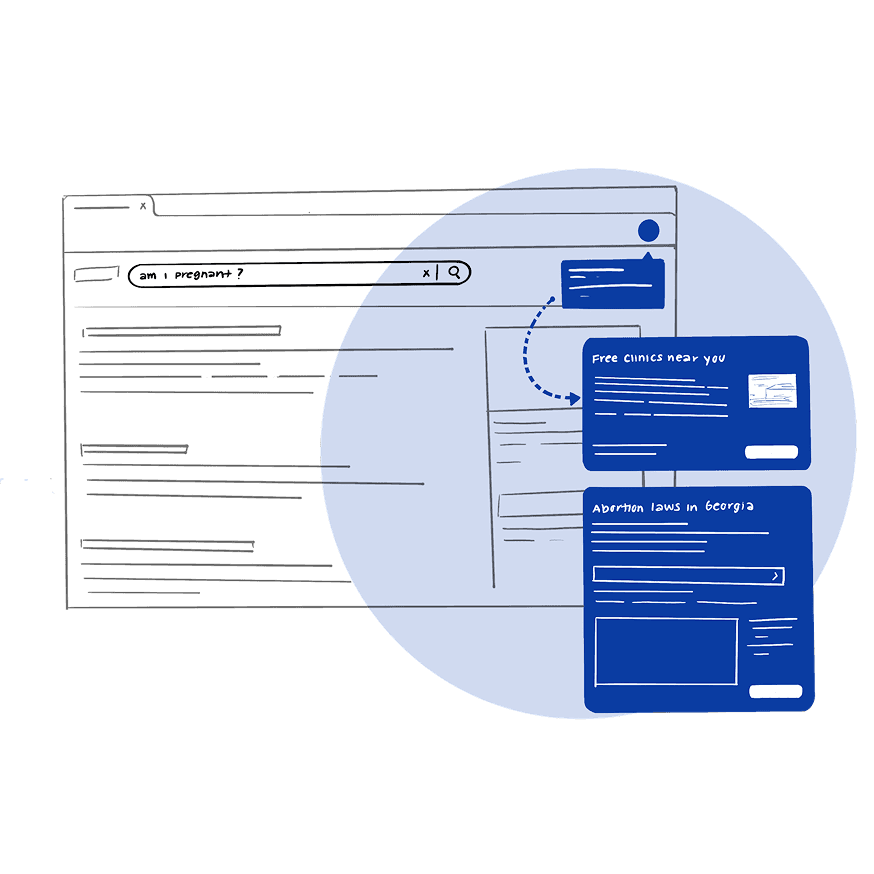
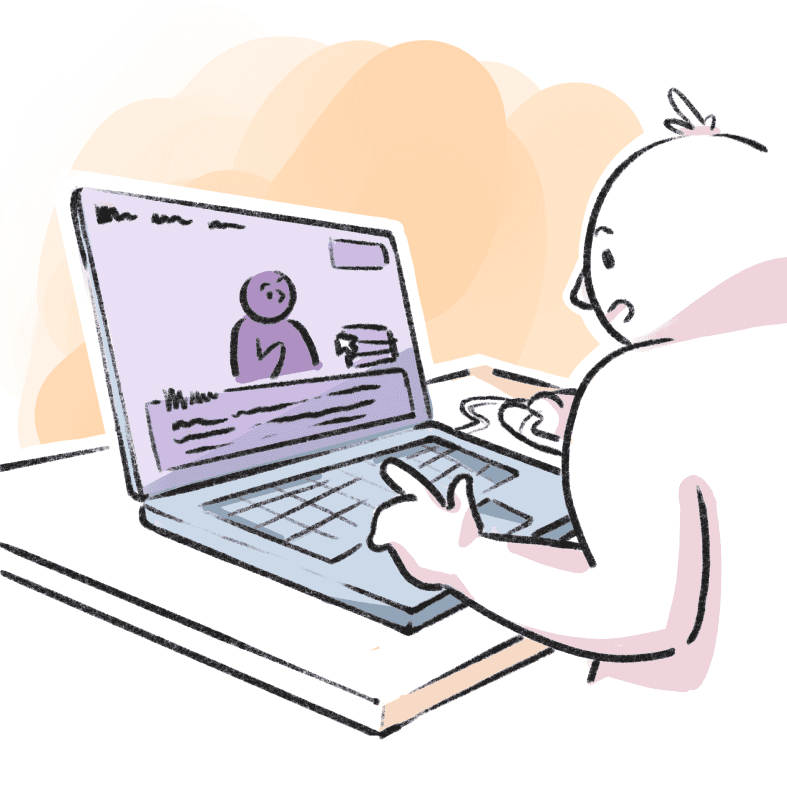

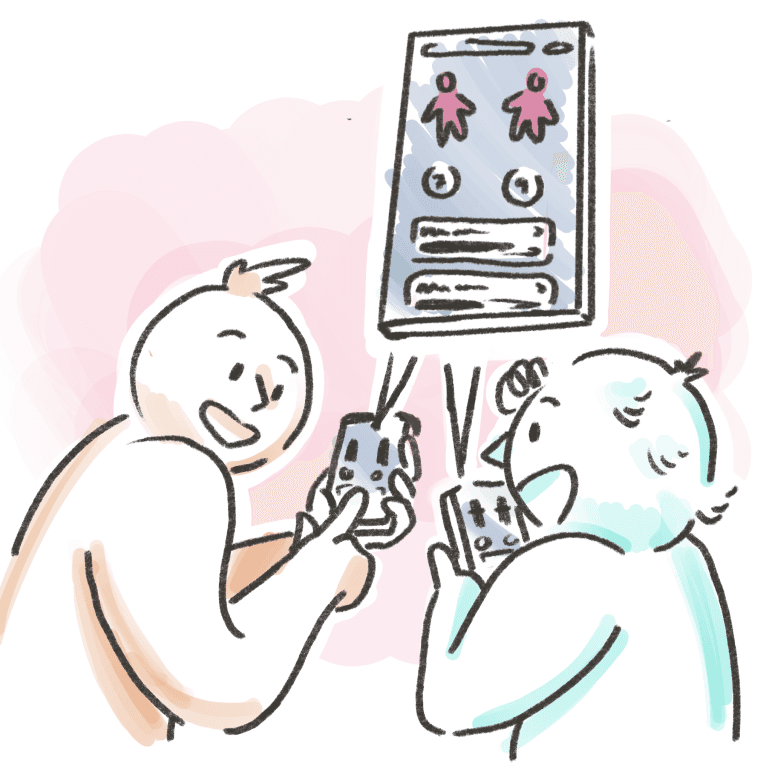

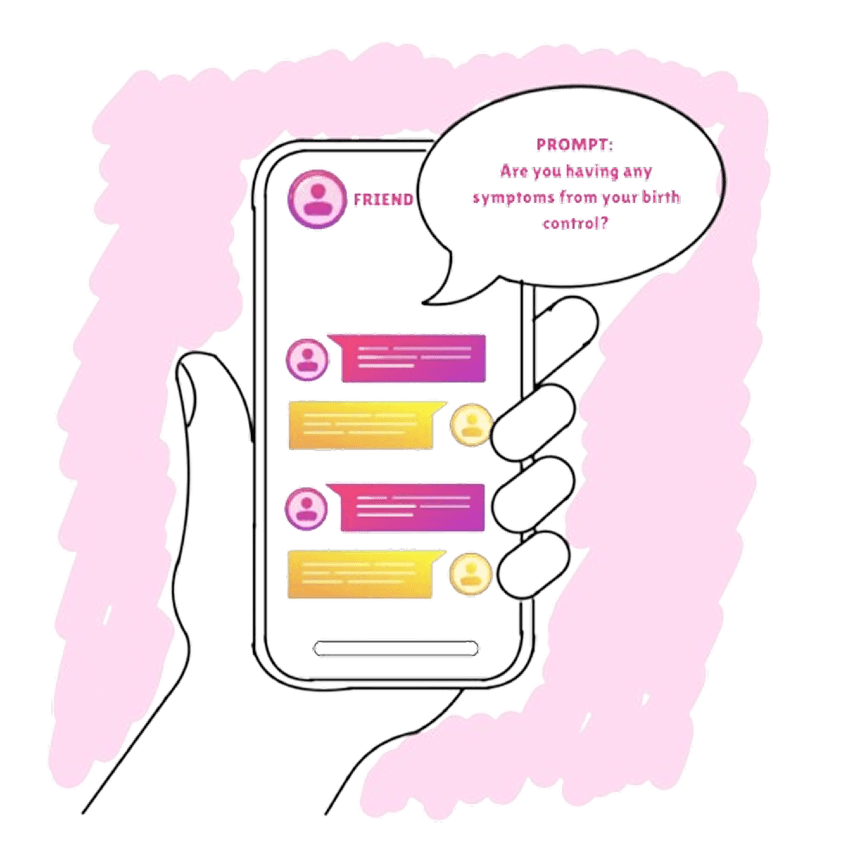
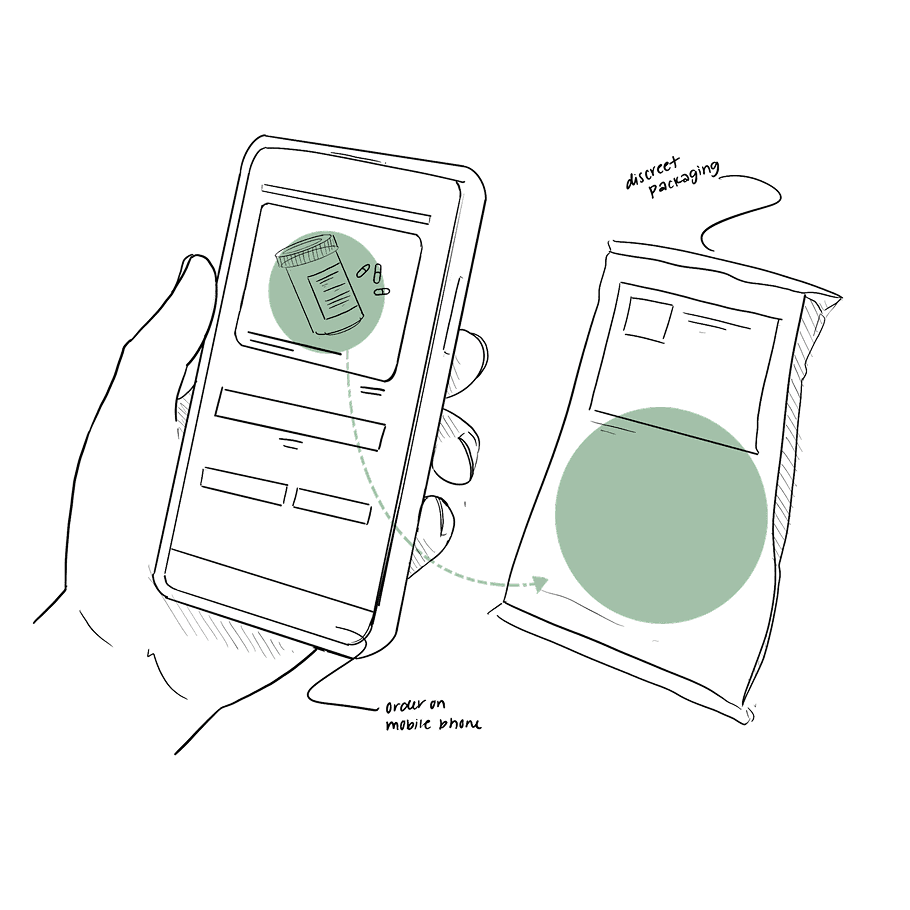
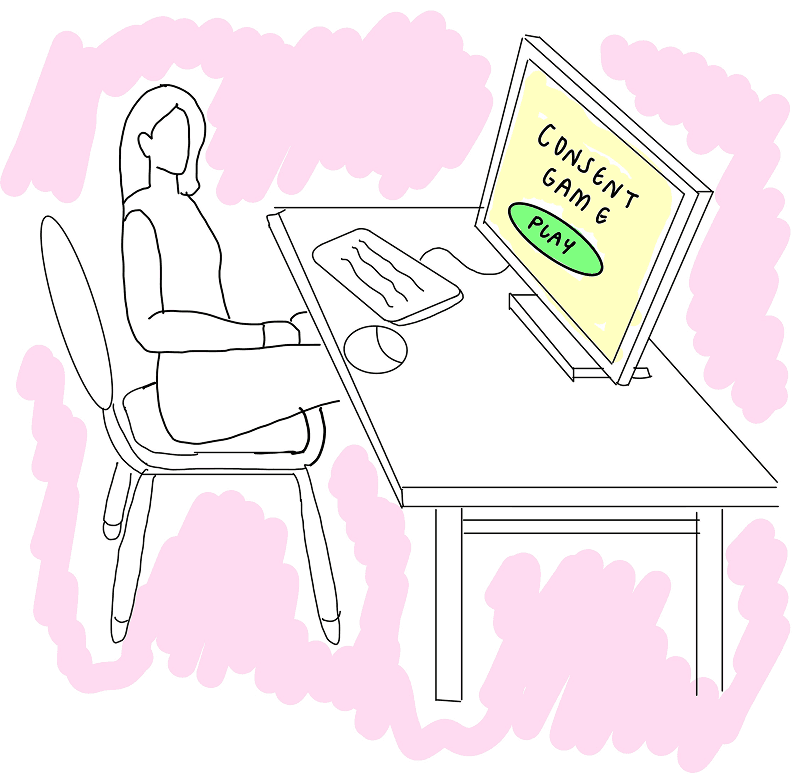
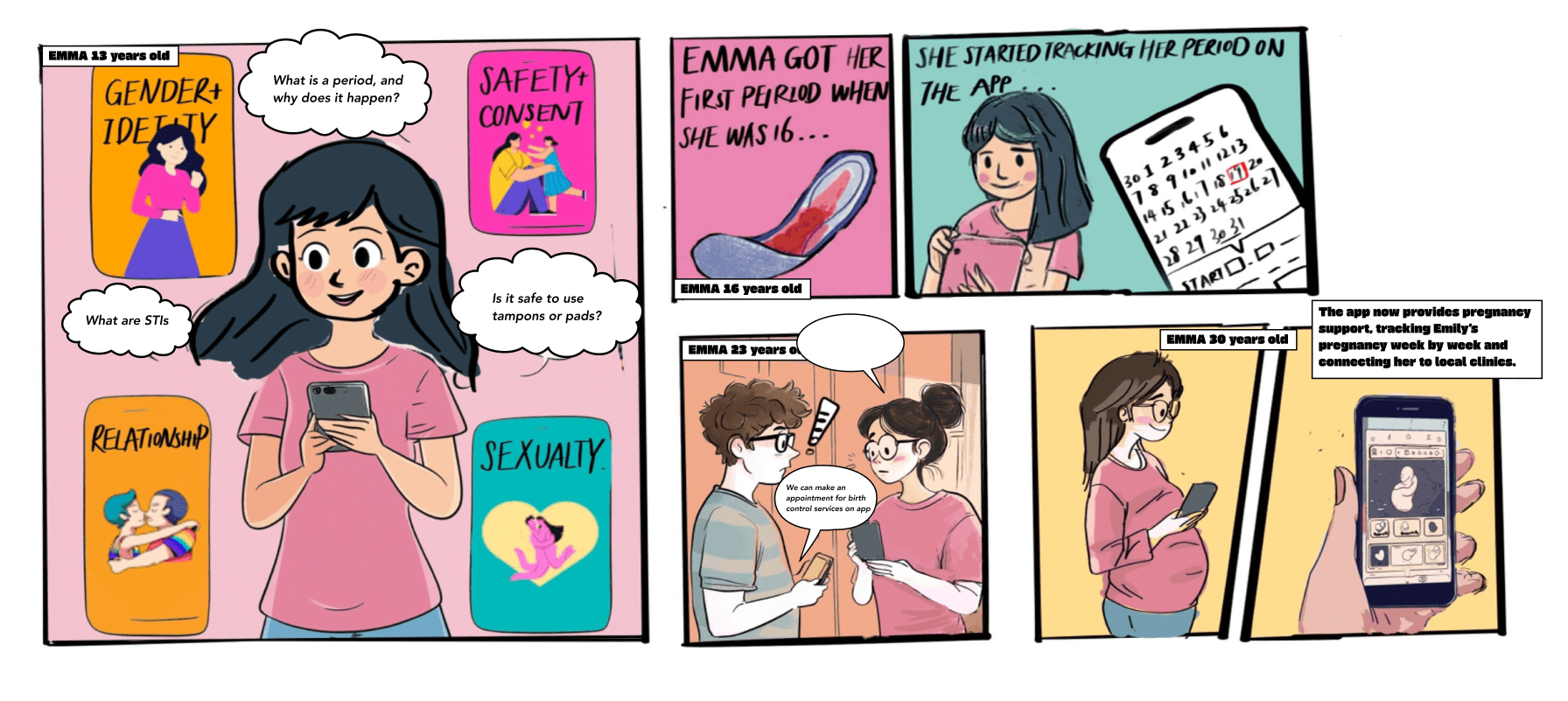
Following feedback, we turned our top two ideas into storyboards
A personalized approach to education, menstrual cycle tracking, medication services, information about local clinics, pregnancy aide, information about reproductive rights. Frequent check-ins and updates to see if any part of our user’s health has changed.
A tool for navigating online resources, aiding users in learning and avoiding mis-information when searching about health related topics.
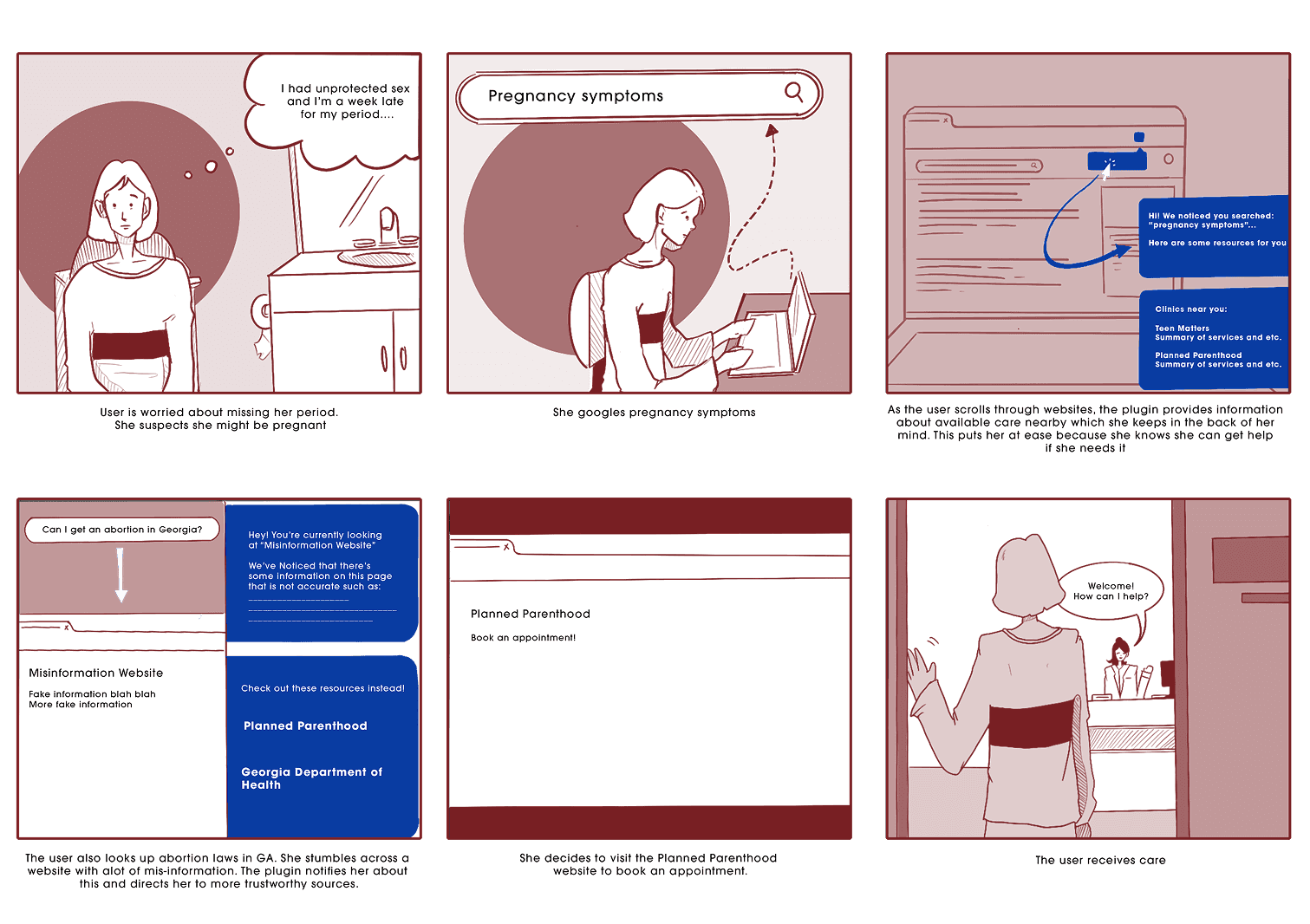
Ultimately expert and user feedback pointed to the chrome plugin best aligned with our user needs.
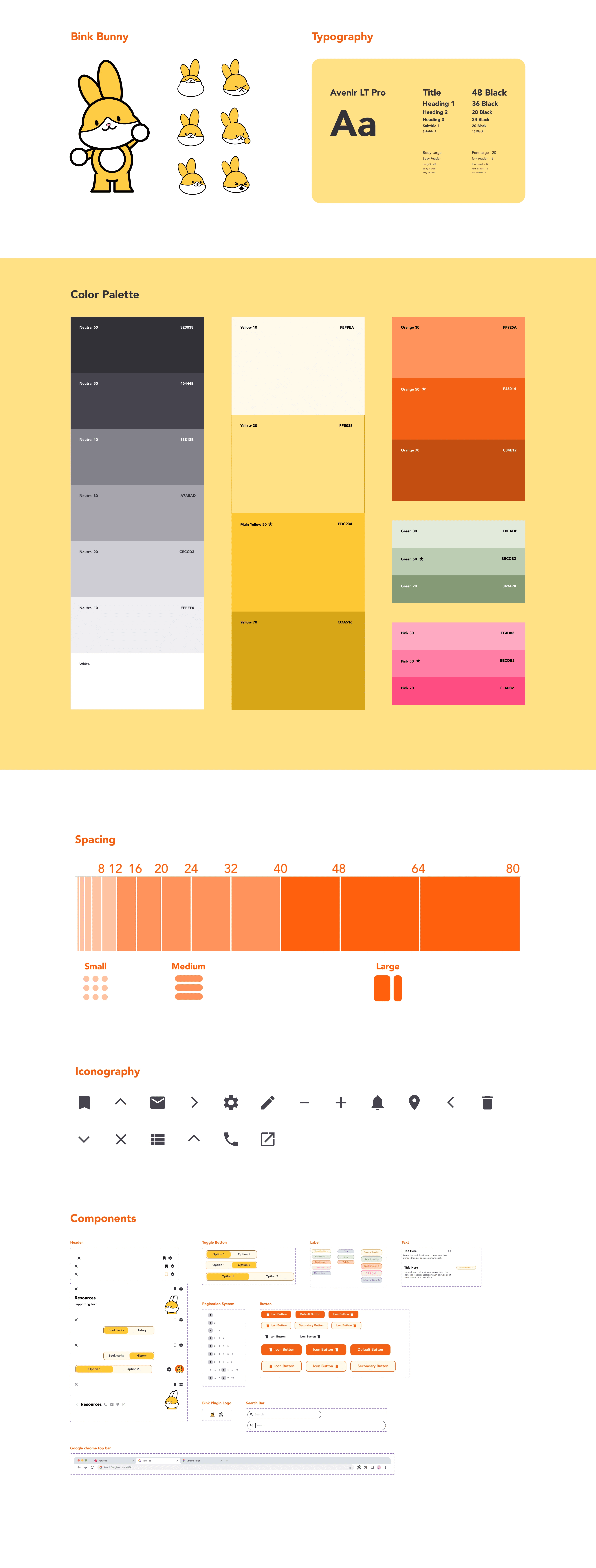
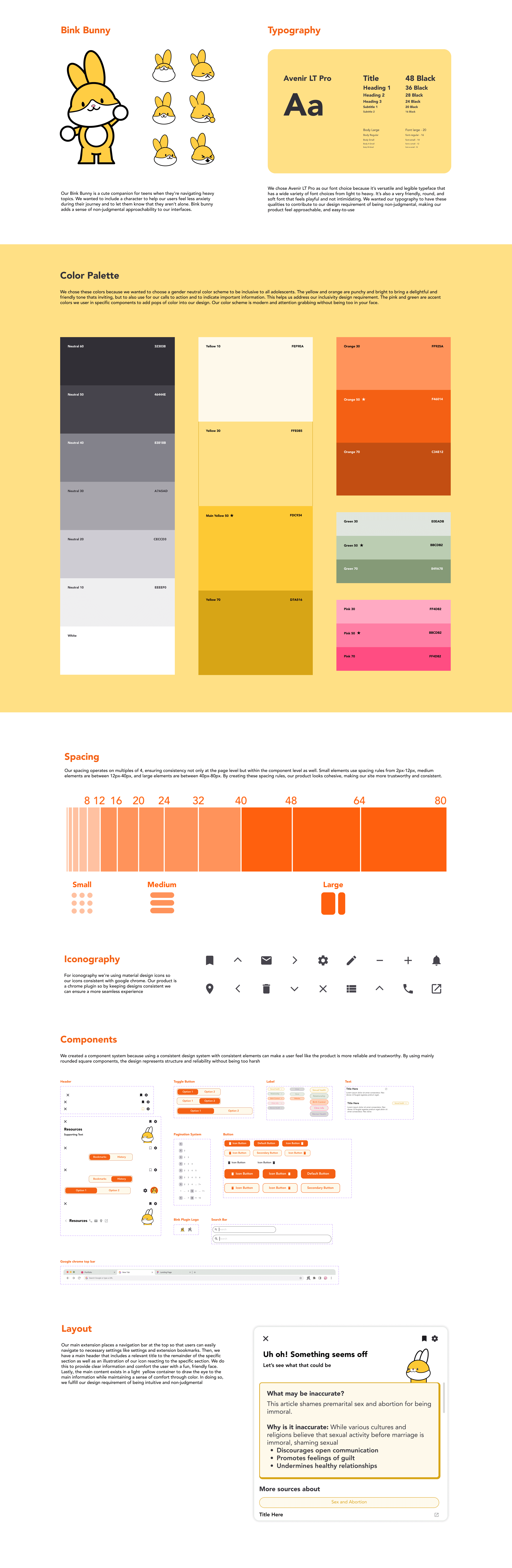
Design System


WHat I Learned
This project showed me how deeply trust, privacy, and tone influence whether users will engage with certain types of information. I learned that even well-intentioned educational tools can fail if they feel judgmental, overwhelming, or inaccessible—and that designing for teens requires meeting them where they already are, both digitally and emotionally.
Working across research and design also reinforced the importance of grounding decisions in real user needs, not assumptions. Listening to teens, educators, and healthcare advocates helped us prioritize clarity over completeness and simplicity over feature breadth, ultimately shaping a product that feels supportive rather than instructional.