✦ Projects
✦ Projects
✦ Projects
Verizon Driver Coaching App
TIME
August 2025 - December 2025
TYPE
Verizon Connect Sponsored Project
TOOLS
Figma
Qualtrics
UserInterviews
ROLE
(Group)
UX Researcher
UX Designer
TIME
August 2025 -
December 2025
ROLE
(Group)
UX Researcher
UX Designer
TOOLS
Figma
Qualtrics
UserInterviews
TYPE
Verizon Connect
Sponsored Project
CONTEXT
Verizon Connect is a B2B fleet management platform that uses GPS tracking, Electronic Logging Devices (ELDs), and in-cab cameras to help fleet managers monitor safety, compliance, and driver performance. While these tools generate rich data about driving behavior and hours of service, they are largely designed for managers—leaving drivers with limited visibility or control.
As monitoring technologies and regulations have expanded, many drivers now associate coaching with surveillance, stress, and privacy concerns rather than support. Partnering with Verizon Connect, this project explored how a driver-first, research-driven approach could reframe coaching by transforming existing fleet data into a self-coaching mobile experience that builds trust while supporting safety and performance.
How can a technology-driven self-coaching application enhance driver retention, satisfaction, and performance in the trucking industry while aligning the goals of both drivers and managers?
How can a technology-driven self-coaching application enhance driver retention, satisfaction, and performance in the trucking industry while aligning the goals of both drivers and managers?
How can a technology-driven self-coaching application enhance driver retention, satisfaction, and performance in the trucking industry while aligning the goals of both drivers and managers?
research
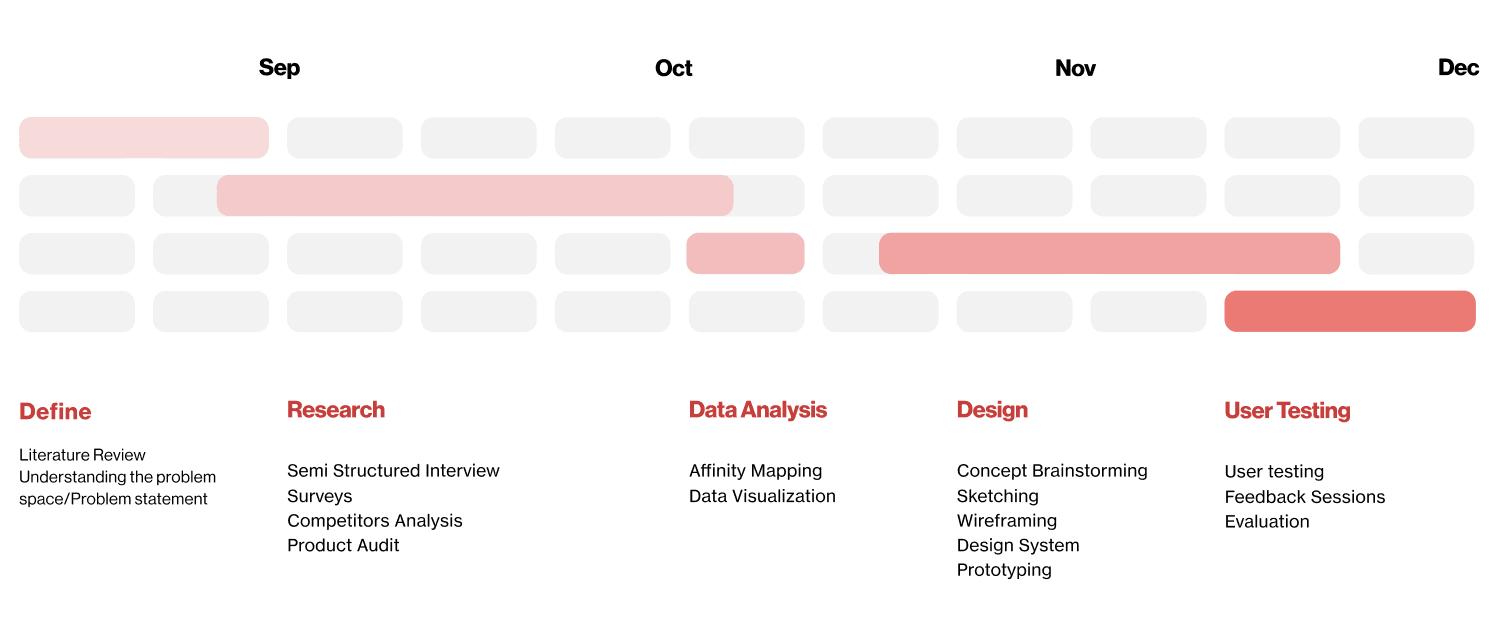
How we built a data-driven product
TIMELINE
methods
We grounded the design in evidence, combining secondary research with direct user and expert input.
SEMI-STRUCTURED INTERVIEWS
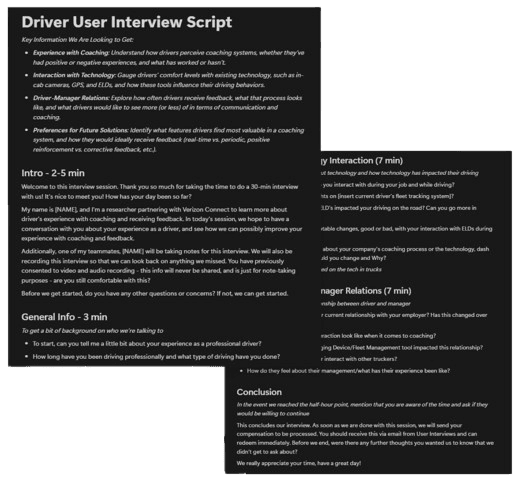
7 semi-structured interviews exploring drivers’ coaching experiences, technology use, and feedback workflows
SEMI-STRUCTURED INTERVIEWS
7 semi-structured interviews exploring drivers’ coaching experiences, technology use, and feedback workflows
SEMI-STRUCTURED INTERVIEWS
7 semi-structured interviews exploring drivers’ coaching experiences, technology use, and feedback workflows
SURVEYS
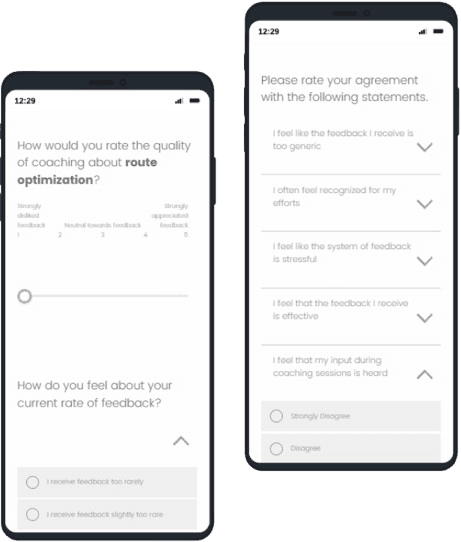
A survey with 10 drivers examining coaching goals, motivations, and feedback preferences
SURVEYS
A survey with 10 drivers examining coaching goals, motivations, and feedback preferences
SURVEYS
A survey with 10 drivers examining coaching goals, motivations, and feedback preferences
WEBSITE TEAR DOWN
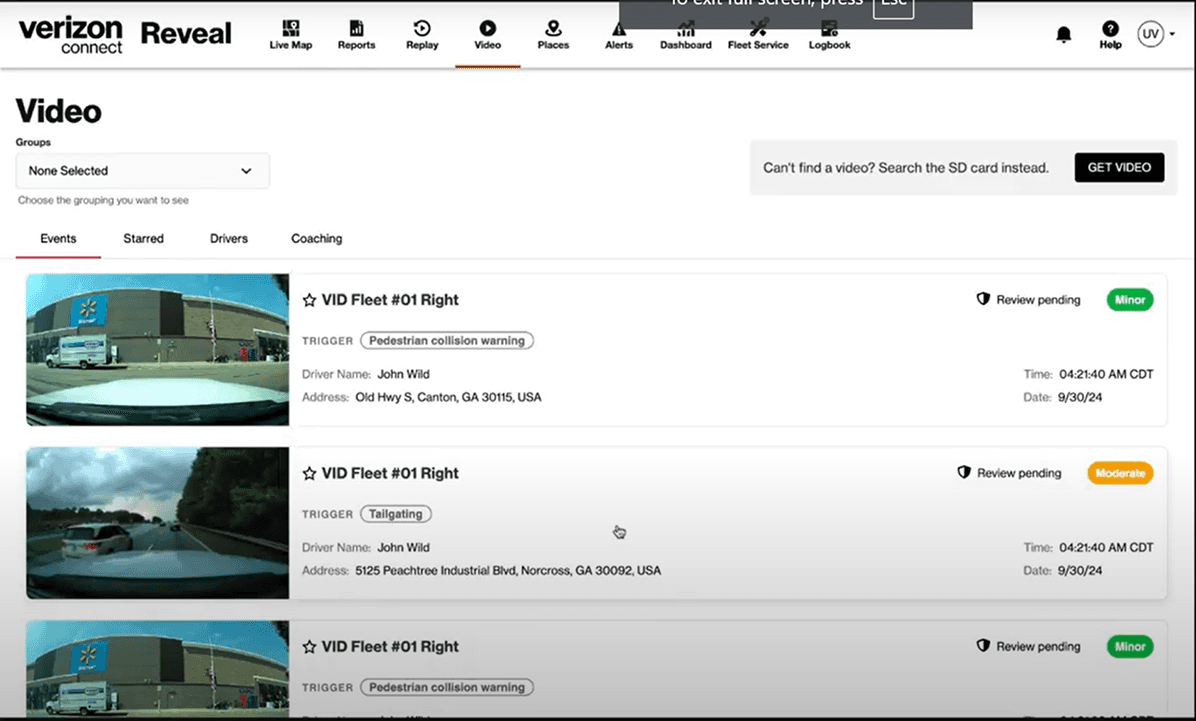
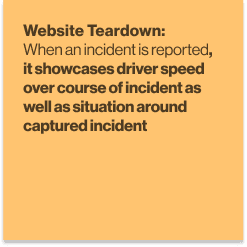
A platform teardown exploring data visibility, user roles, and driver pain points within Verizon Connect.
WEBSITE TEAR DOWN
A platform teardown exploring data visibility, user roles, and driver pain points within Verizon Connect.
WEBSITE TEAR DOWN
A platform teardown exploring data visibility, user roles, and driver pain points within Verizon Connect.
COMPETITIVE ANALYSIS
A competitive analysis examining strengths, weaknesses, and gaps across 7 existing solutions
COMPETITIVE ANALYSIS
A competitive analysis examining strengths, weaknesses, and gaps across 7 existing solutions
COMPETITIVE ANALYSIS
A competitive analysis examining strengths, weaknesses, and gaps across 7 existing solutions





Findings
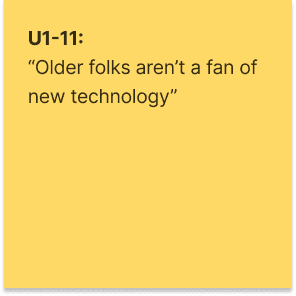
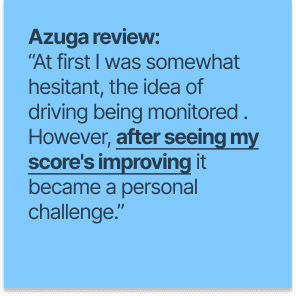
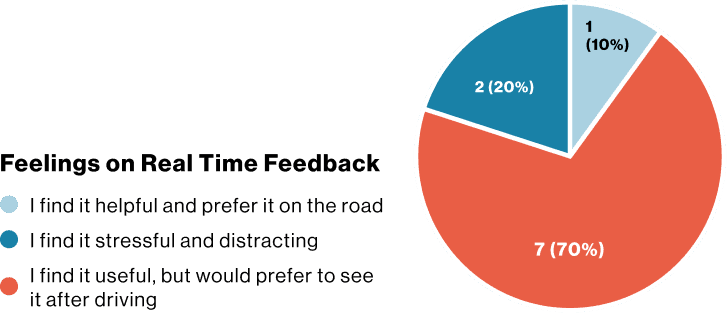
Tracking software met with negative reaction, but can grow to change if evidence of personal usefulness can be found

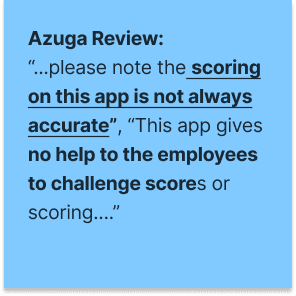
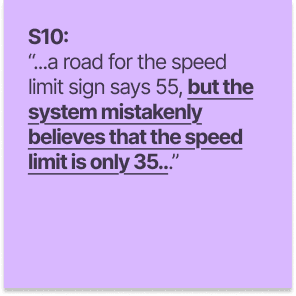
System inaccuracy can occur often in driver coaching software, which leads to driver frustration

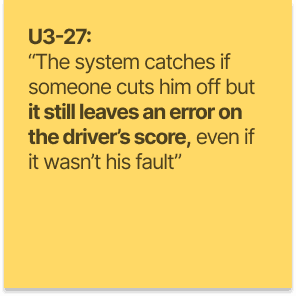
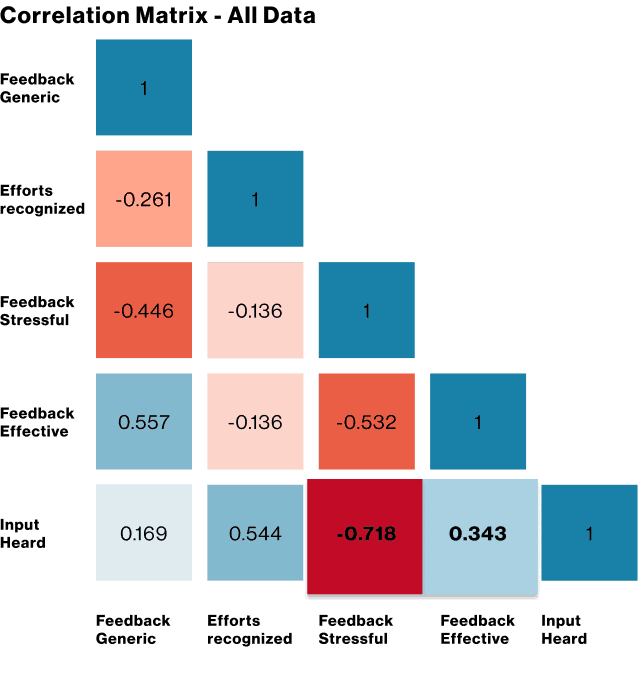
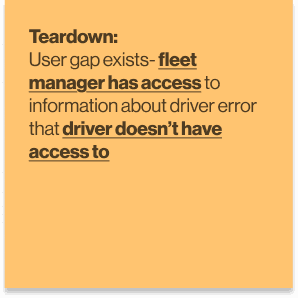
A lack of space for input regarding coaching can lead to a lack of faith in the system and a distrust for the effectiveness of the program

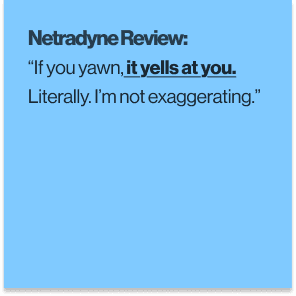
FTS tools feel intrusive and distracting to the user because of the cognitive load of operating around it

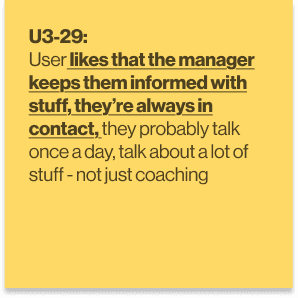
Communication and transparency improve morale and perceived effectiveness
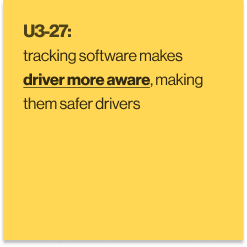
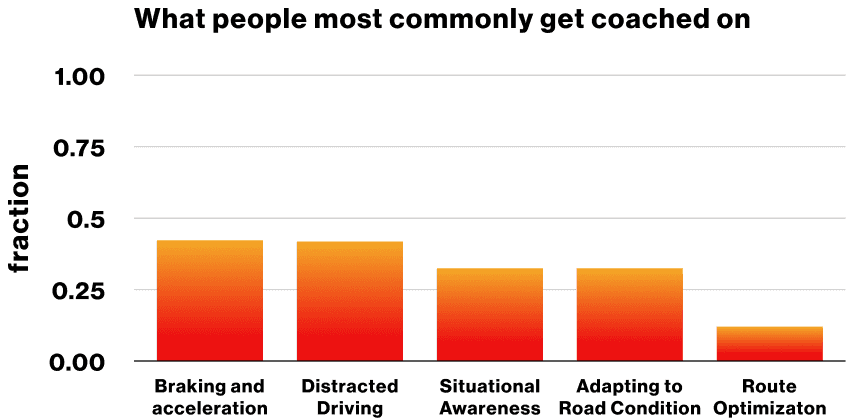
Drivers prioritize and receive feedback on braking and acceleration most, with situational awareness and distracted driving as close seconds.
User needs
key insights
& design directions
NEED
NEED
DESIGN REQUIREMENT
DESIGN REQUIREMENT
Users need to understand the metrics they’re coached on
Users need to understand the metrics they’re coached on
DR-1 The system should be transparent in how it measures drivers
DR-1 The system should be transparent in how it measures drivers
Users need to feel like the system is pointing out accurate errors, or exonerate themselves if and when the system will be inaccurate
Users need to feel like the system is pointing out accurate errors, or exonerate themselves if and when the system will be inaccurate
Users need to feel like the system is pointing out accurate errors, or exonerate themselves if and when the system will be inaccurate
DR-2 The system should be reliable, but give users the ability to challenge erroneous feedback
DR-2 The system should be reliable, but give users the ability to challenge erroneous feedback
Users need to feel like the system is working for them rather than against them
Users need to feel like the system is working for them rather than against them
DR-3 The system should reward good driving and score as a metric of growth
DR-3 The system should reward good driving and score as a metric of growth
Users need to remain undistracted on the road
Users need to remain undistracted on the road
DR-4 Provide updates non-intrusively, balancing effective coaching with safe driving
DR-4 Provide updates non-intrusively, balancing effective coaching with safe driving
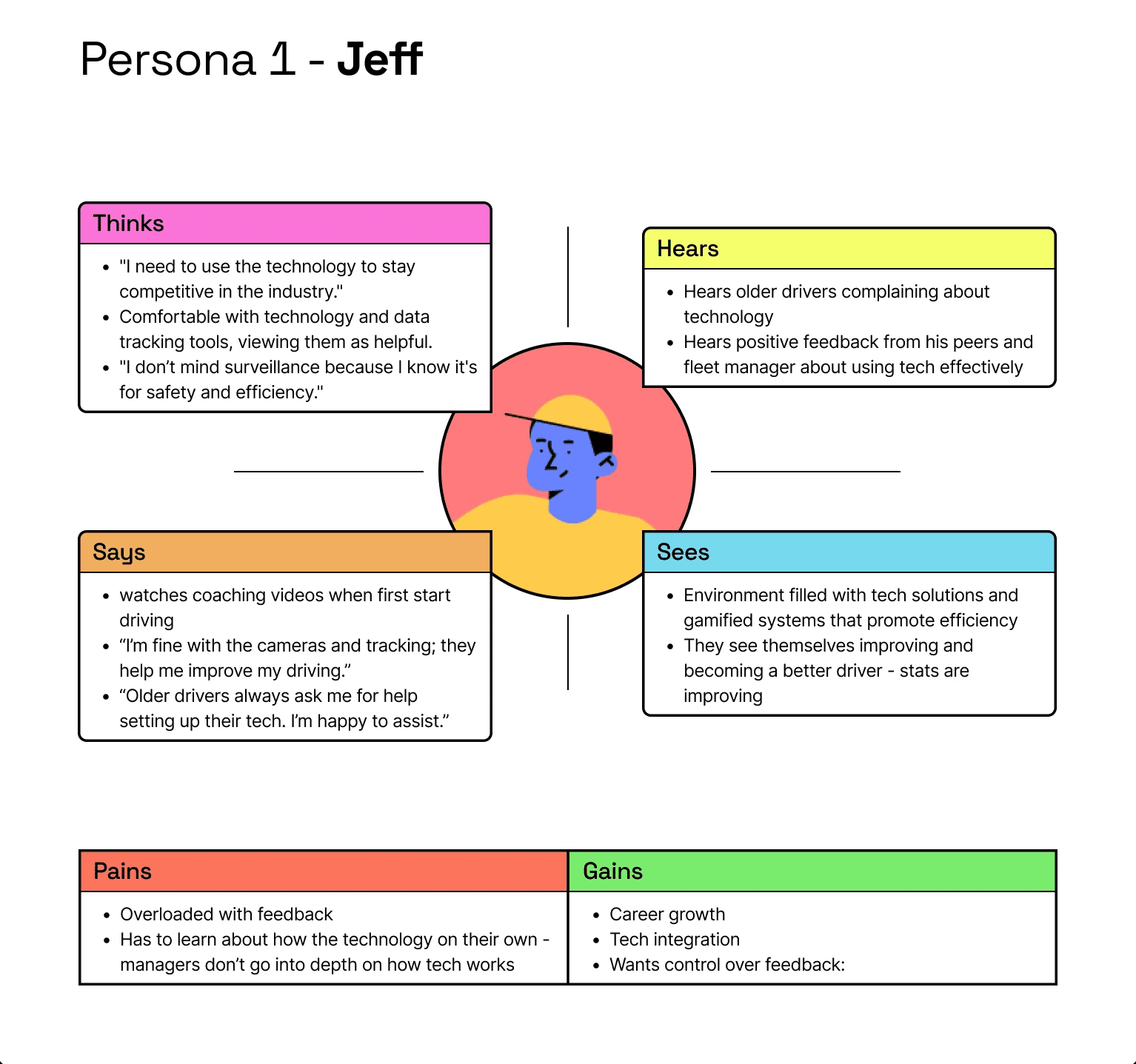
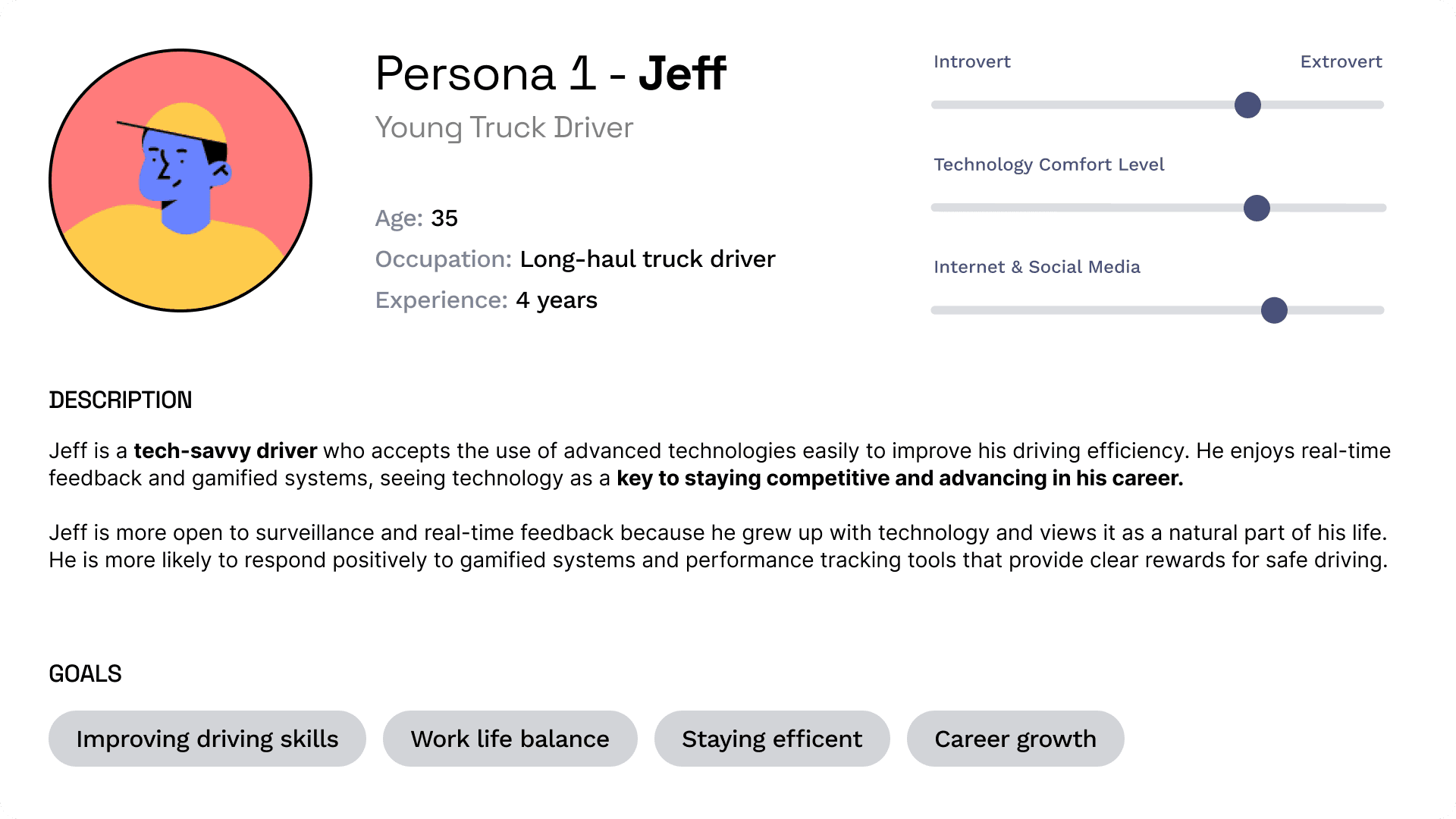
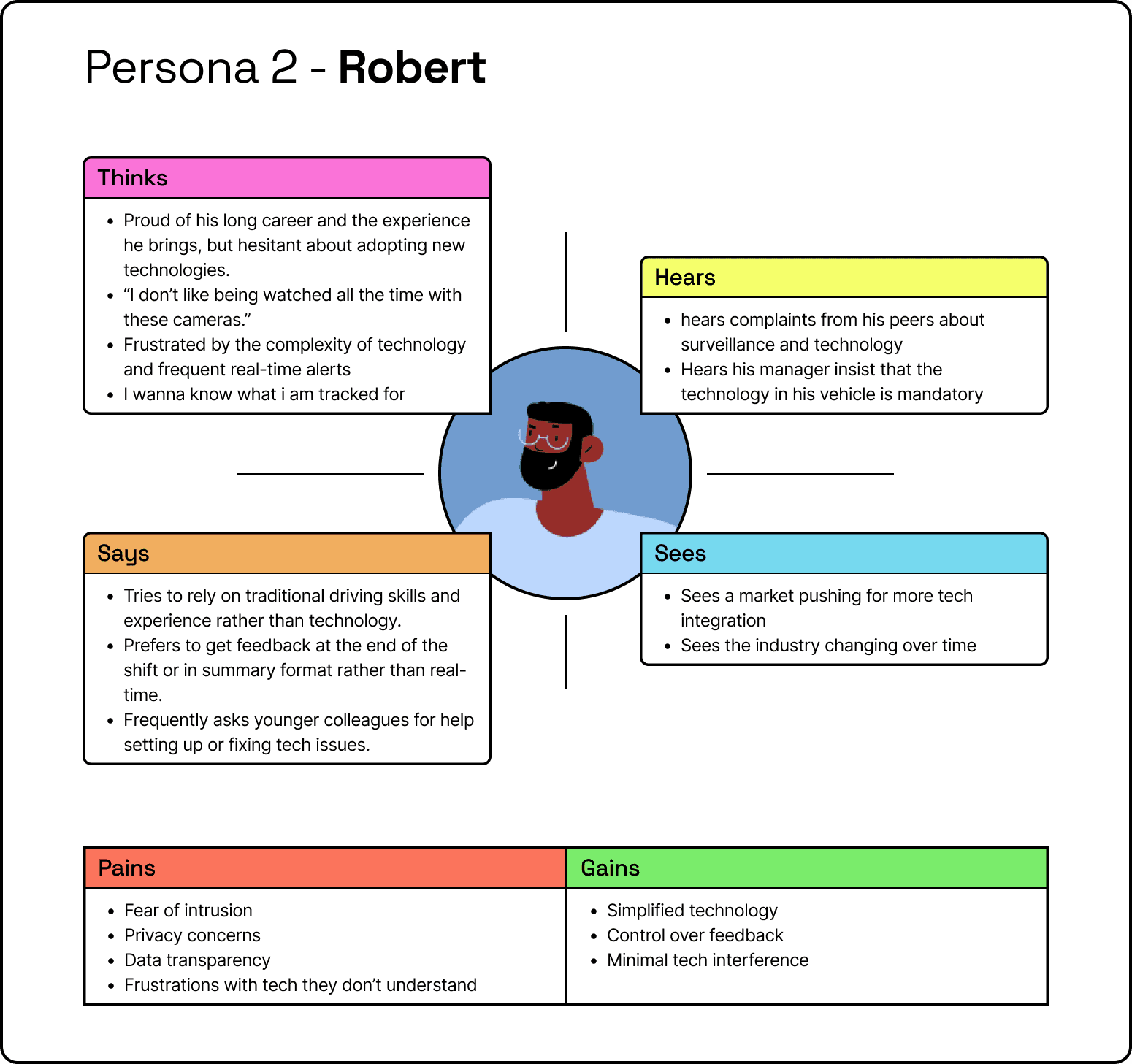
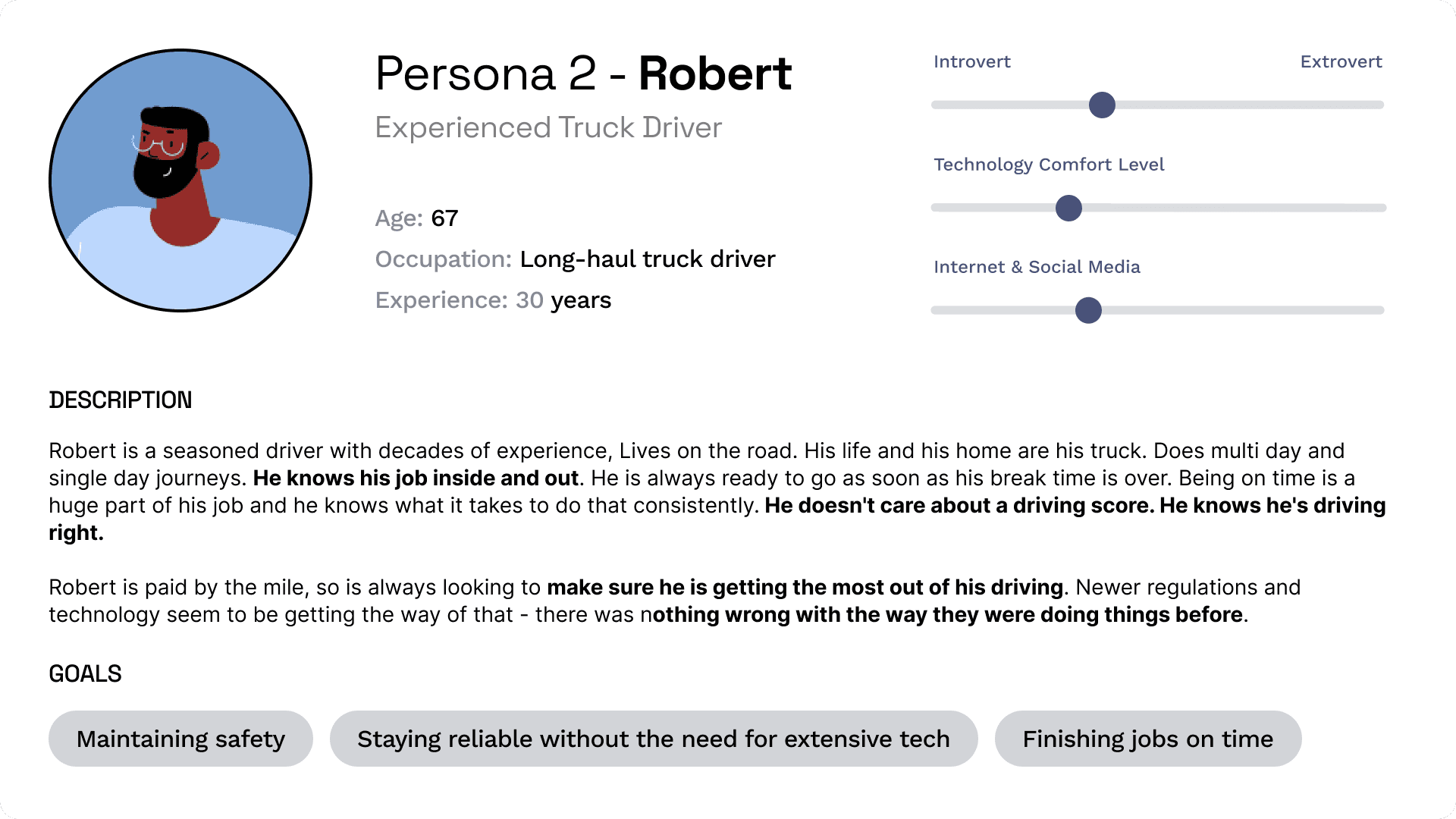
Personas
Ideation
Using brainstorming strategies like S.C.A.M.P.E.R., worst possible idea, and others, our team began exploring what the final solution could look like. These concepts attempted to highlight good driving and to provide data to drivers they previously didn't have access to.
concept sketches
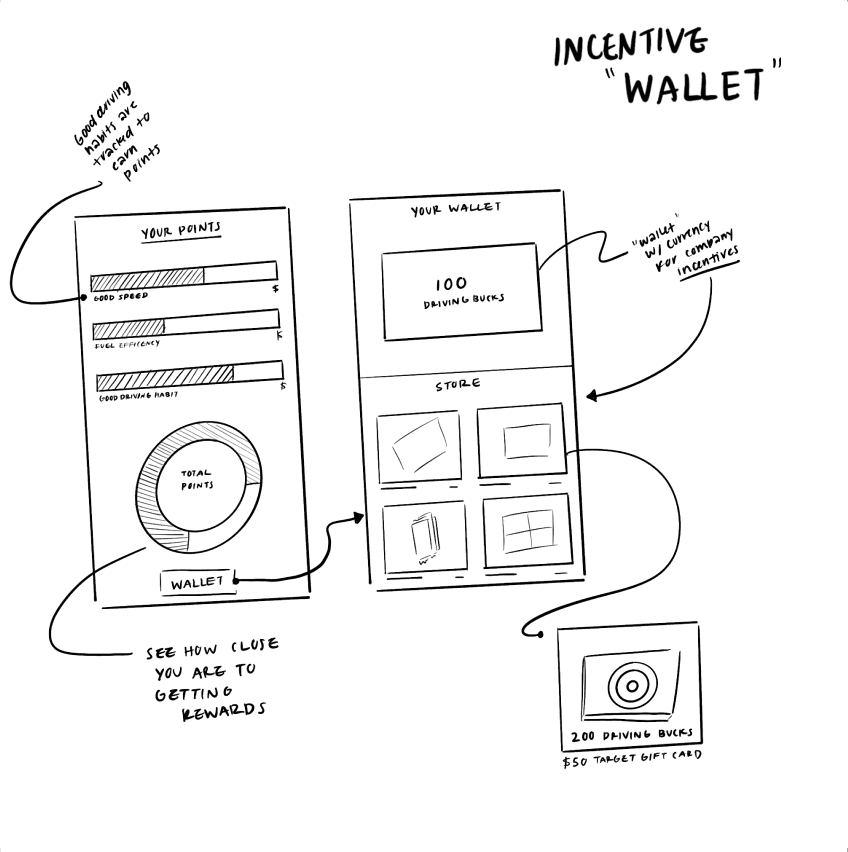
Wallet
Encourages and supports good driving, does not reduce points for poor driving
Encourages and supports good driving, does not reduce points for poor driving
Encourages and supports good driving, does not reduce points for poor driving
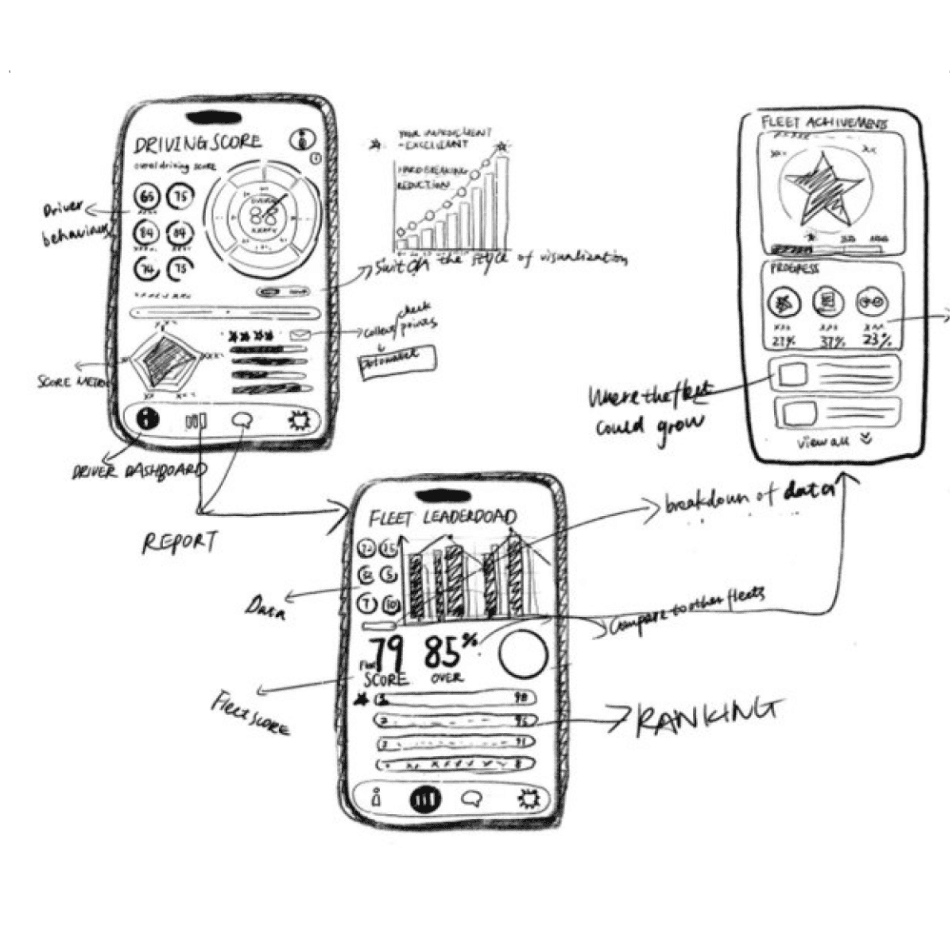
Leaderboard
It will be clear what drivers earn points for and how they can improve
It will be clear what drivers earn points for and how they can improve
It will be clear what drivers earn points for and how they can improve
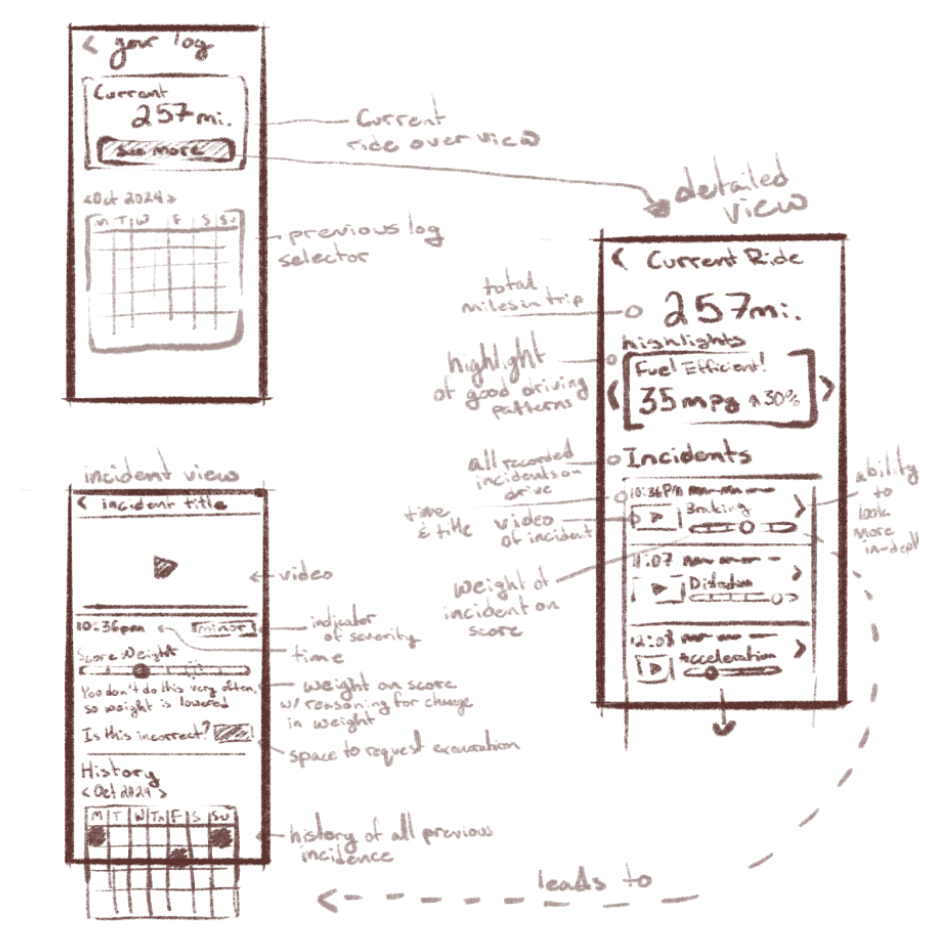
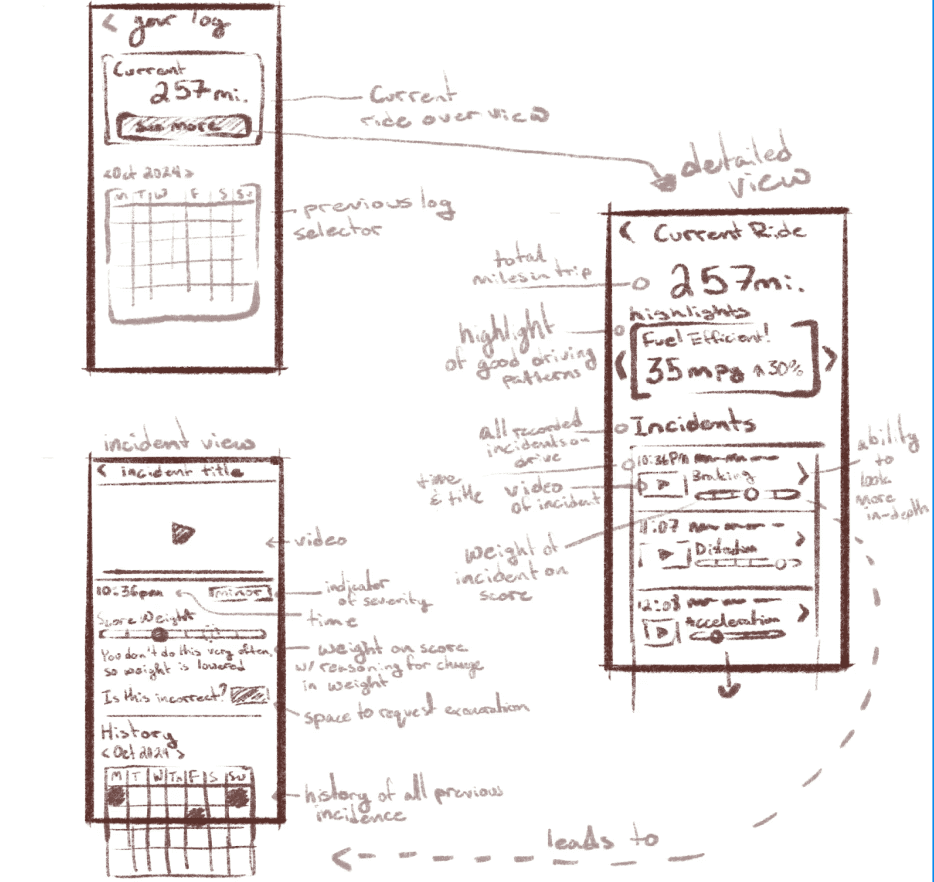
Post Shift Report
Points directly reward good driving
Points directly reward good driving
Points directly reward good driving
Feedback & Findings
Early concept feedback was collected through short client interviews, surveys shared with truck drivers and the Verizon Connect team, and UX expert discussions to surface usability concerns and overall reactions.
Early concept feedback was collected through short client interviews, surveys shared with truck drivers and the Verizon Connect team, and UX expert discussions to surface usability concerns and overall reactions.
PRIORITIZE THE ENGAGED DRIVER
PRIORITIZE THE ENGAGED DRIVER
We should focus on crafting a solution that enhances the motivation of drivers who are already eager to improve.
We should focus on crafting a solution that enhances the motivation of drivers who are already eager to improve.
PROMOTE DRIVER ENGAGEMENT THROUGH PERSONALIZATION
PROMOTE DRIVER ENGAGEMENT THROUGH PERSONALIZATION
It is insufficient for the user to simply observe how and where they can enhance. Our research indicated the importance of empowering drivers by enhancing their control within the application.
It is insufficient for the user to simply observe how and where they can enhance. Our research indicated the importance of empowering drivers by enhancing their control within the application.
CONSIDER HOW TO BREAK UP INFORMATION
CONSIDER HOW TO BREAK UP INFORMATION
Users can easily feel overwhelmed by a large volume of information. Moving forward, it is crucial to ensure that the information we provide remains pertinent and succinct.
Users can easily feel overwhelmed by a large volume of information. Moving forward, it is crucial to ensure that the information we provide remains pertinent and succinct.
PRIORITIZE THE ENGAGED DRIVER
We should focus on crafting a solution that enhances the motivation of drivers who are already eager to improve.
PROMOTE DRIVER ENGAGEMENT THROUGH PERSONALIZATION
It is insufficient for the user to simply observe how and where they can enhance. Our research indicated the importance of empowering drivers by enhancing their control within the application.
CONSIDER HOW TO BREAK UP INFORMATION
Users can easily feel overwhelmed by a large volume of information. Moving forward, it is crucial to ensure that the information we provide remains pertinent and succinct.
WIREFRAMES
INFORMATION ARCHITECTURE
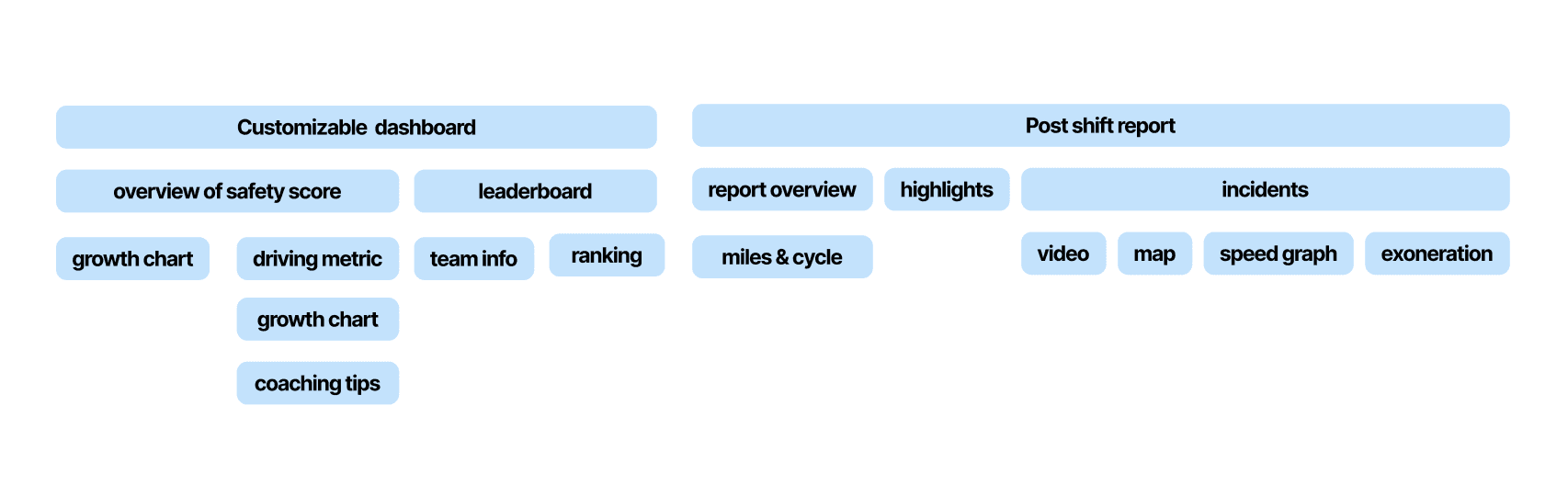
Screens
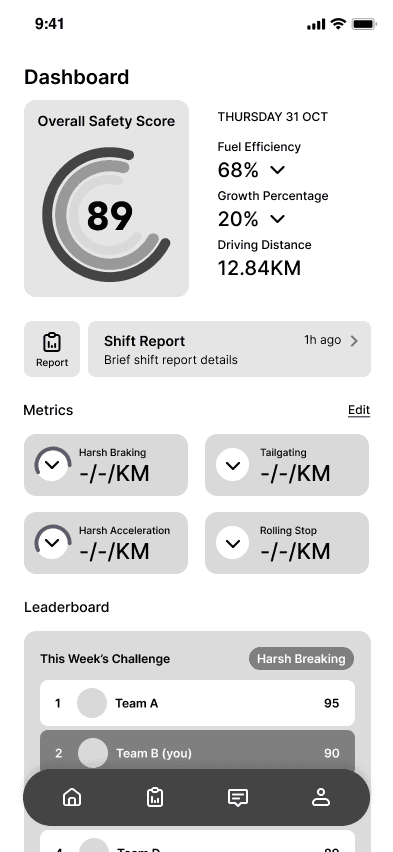
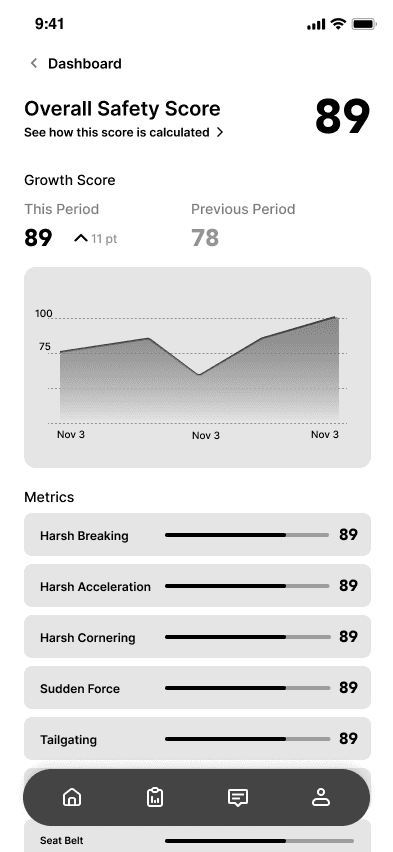
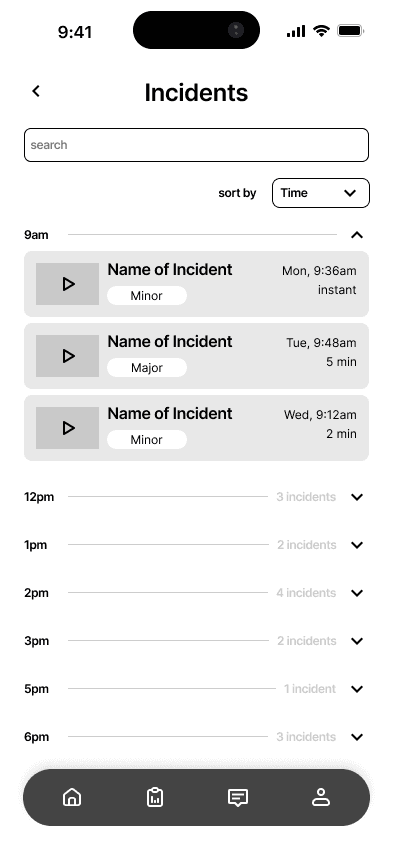
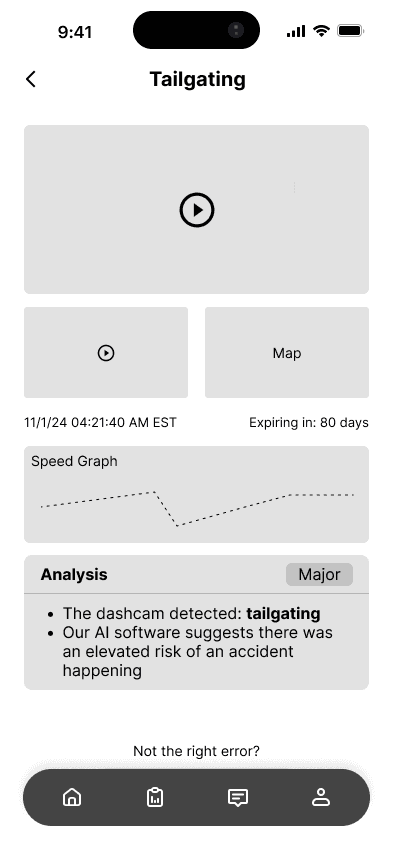

We created wireframes for our identified key user tasks, including:
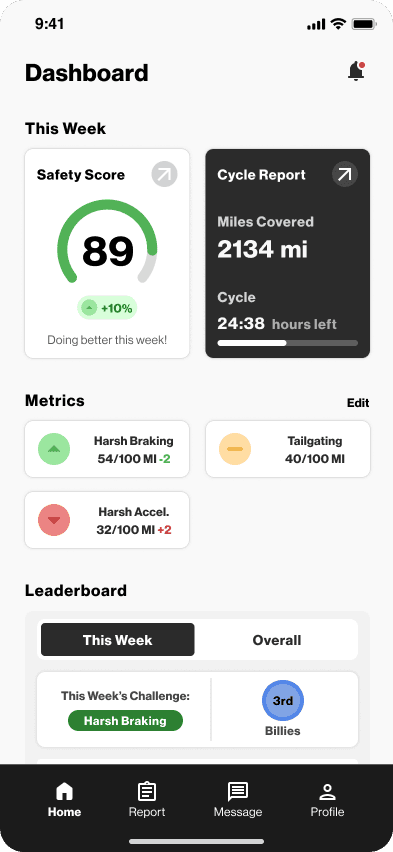
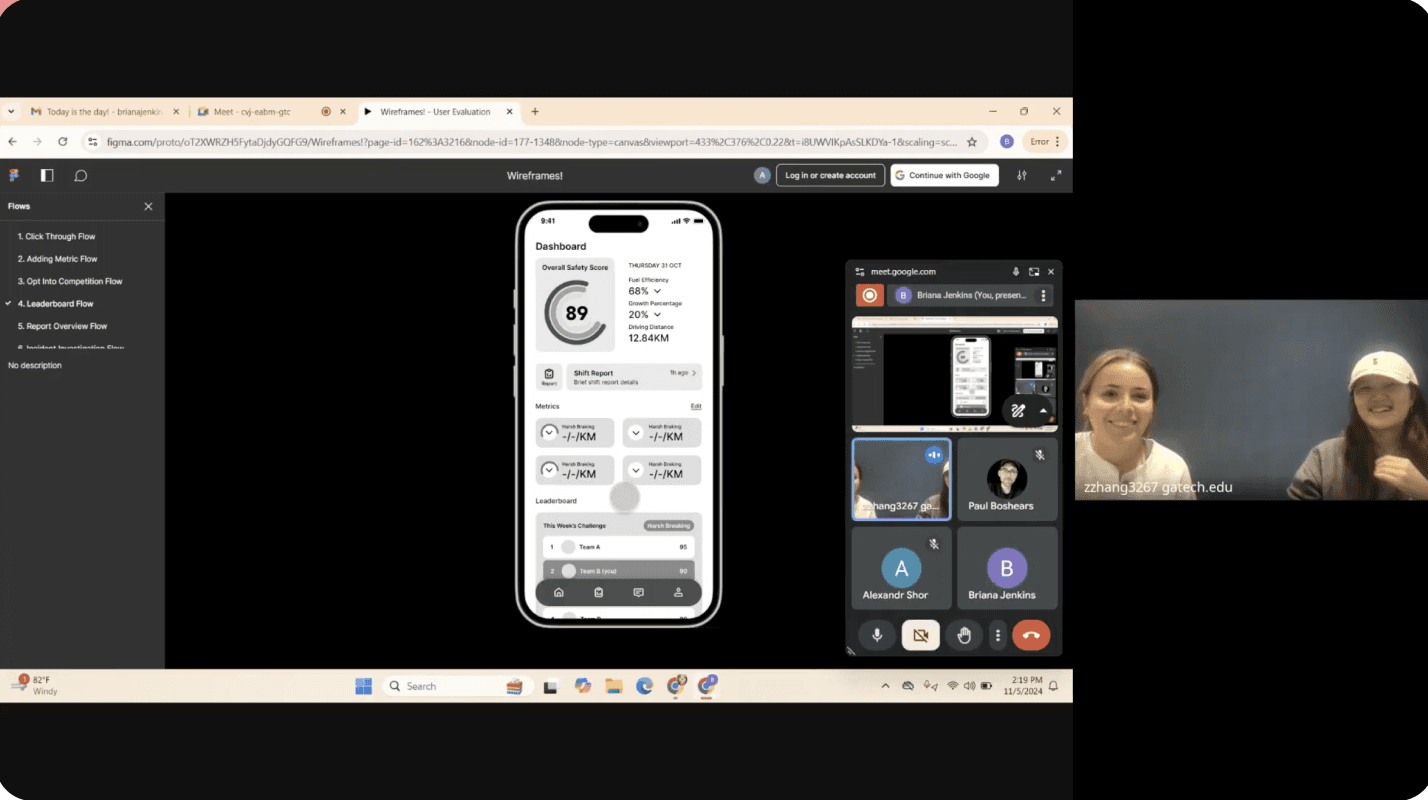
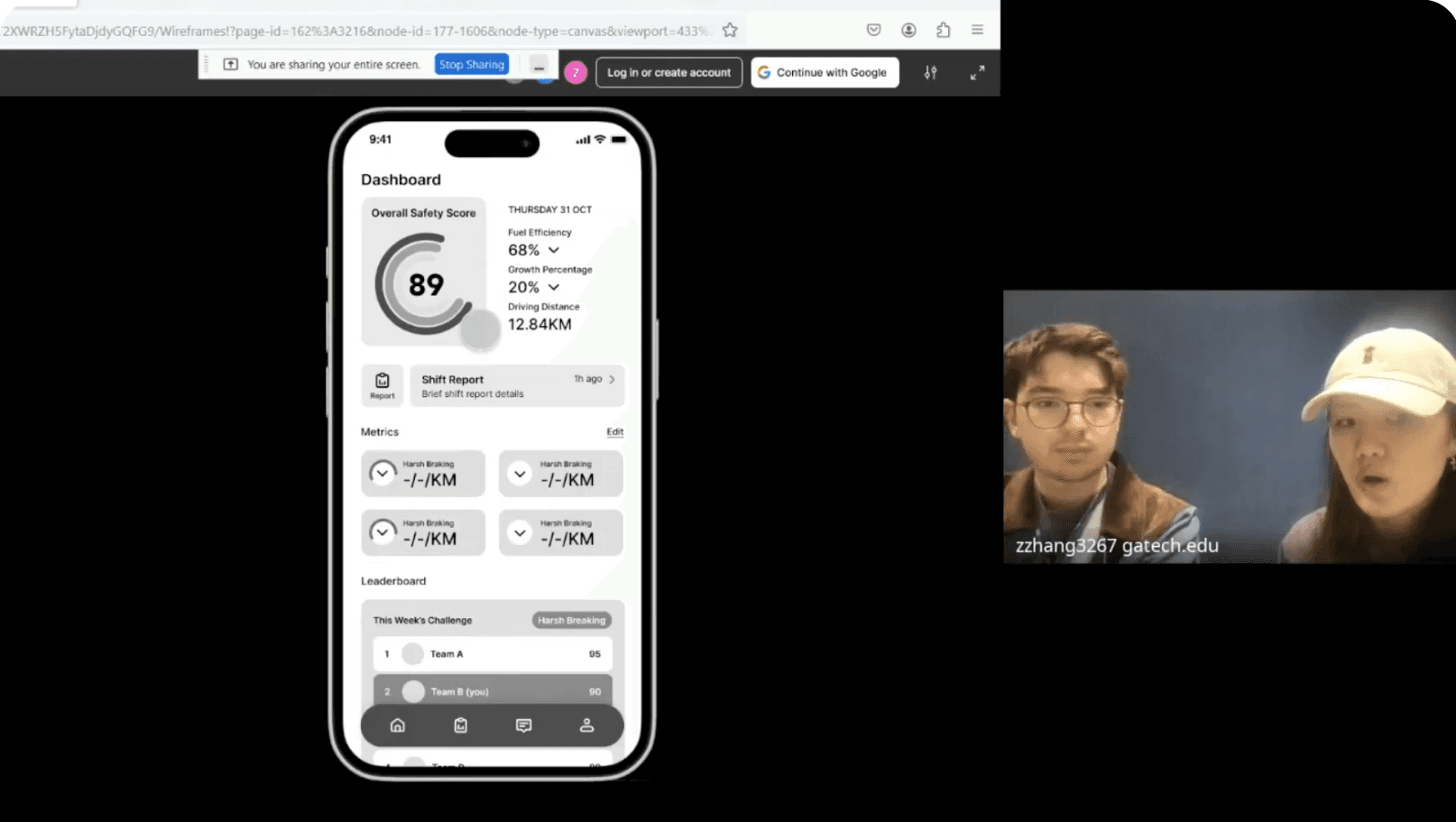
The ability to view metrics for overall driving skill represented as a safety score
The ability to customize the dashboard with driving habits in line with driver priorities
Opting into a leaderboard that gives rewards for highlighted driving habits such as reducing harsh braking or increasing the amount of safe turns
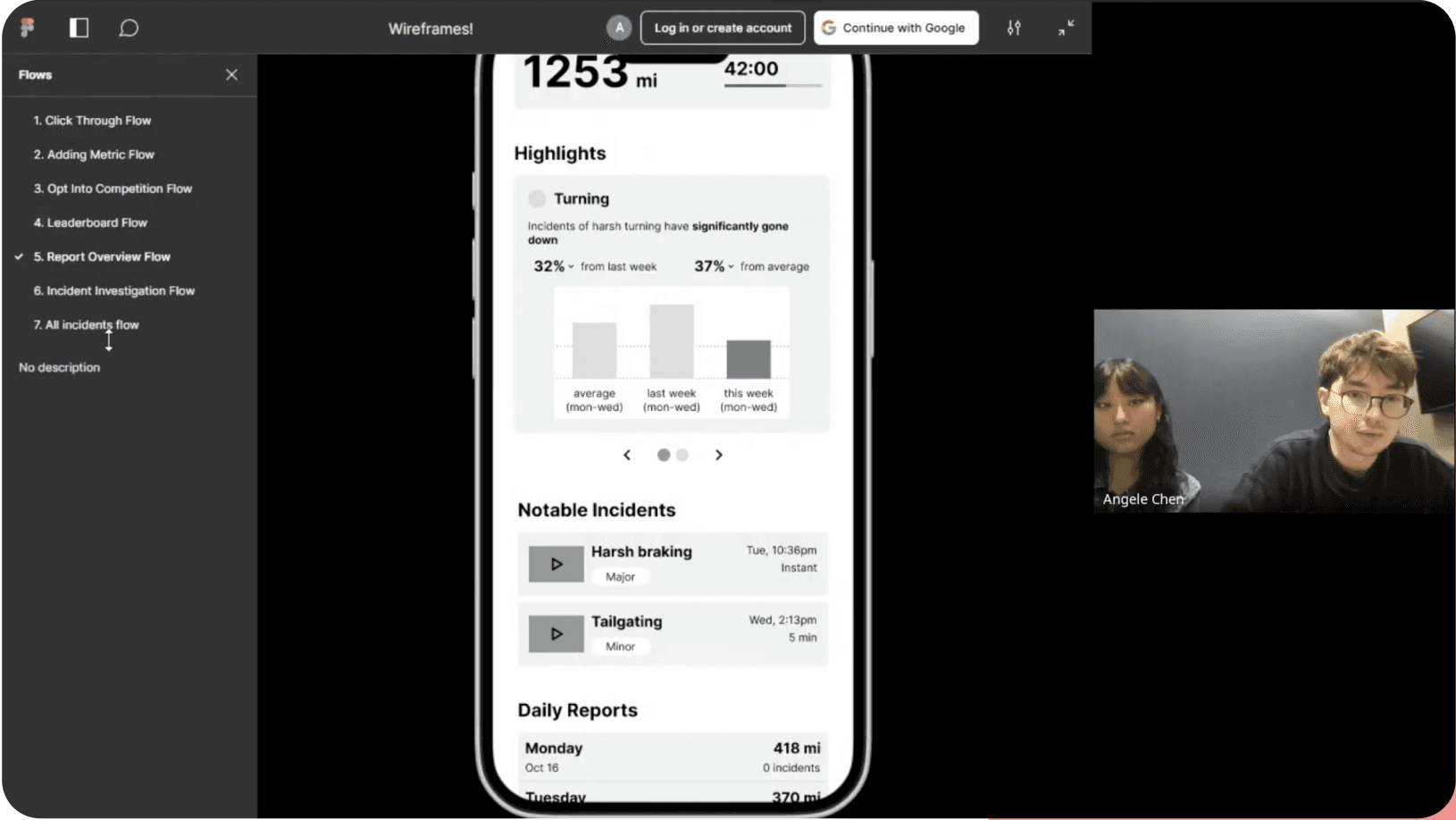
The ability to see a weekly summary of driving in the post shift report
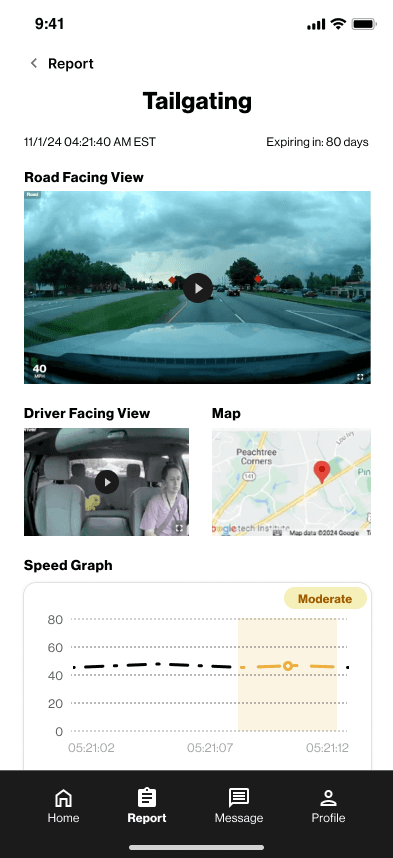
The ability to investigate any recorded incident in depth and
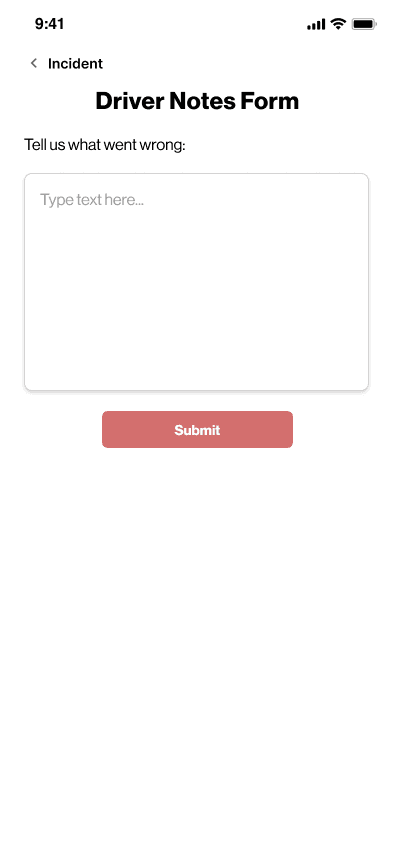
Provide further context to a recorded incident in order to clarify it
We created wireframes for several key user tasks, including:
The ability to view metrics for overall driving skill represented as a safety score
The ability to customize the dashboard with driving habits in line with driver priorities
Opting into a leaderboard that gives rewards for highlighted driving habits such as reducing harsh braking or increasing the amount of safe turns
The ability to see a weekly summary of driving in the post shift report
The ability to investigate any recorded incident in depth and
Provide further context to a recorded incident in order to clarify it
We created wireframes for several key user tasks, including:
The ability to view metrics for overall driving skill represented as a safety score
The ability to customize the dashboard with driving habits in line with driver priorities
Opting into a leaderboard that gives rewards for highlighted driving habits such as reducing harsh braking or increasing the amount of safe turns
The ability to see a weekly summary of driving in the post shift report
The ability to investigate any recorded incident in depth and
Provide further context to a recorded incident in order to clarify it
Feedback & Findings
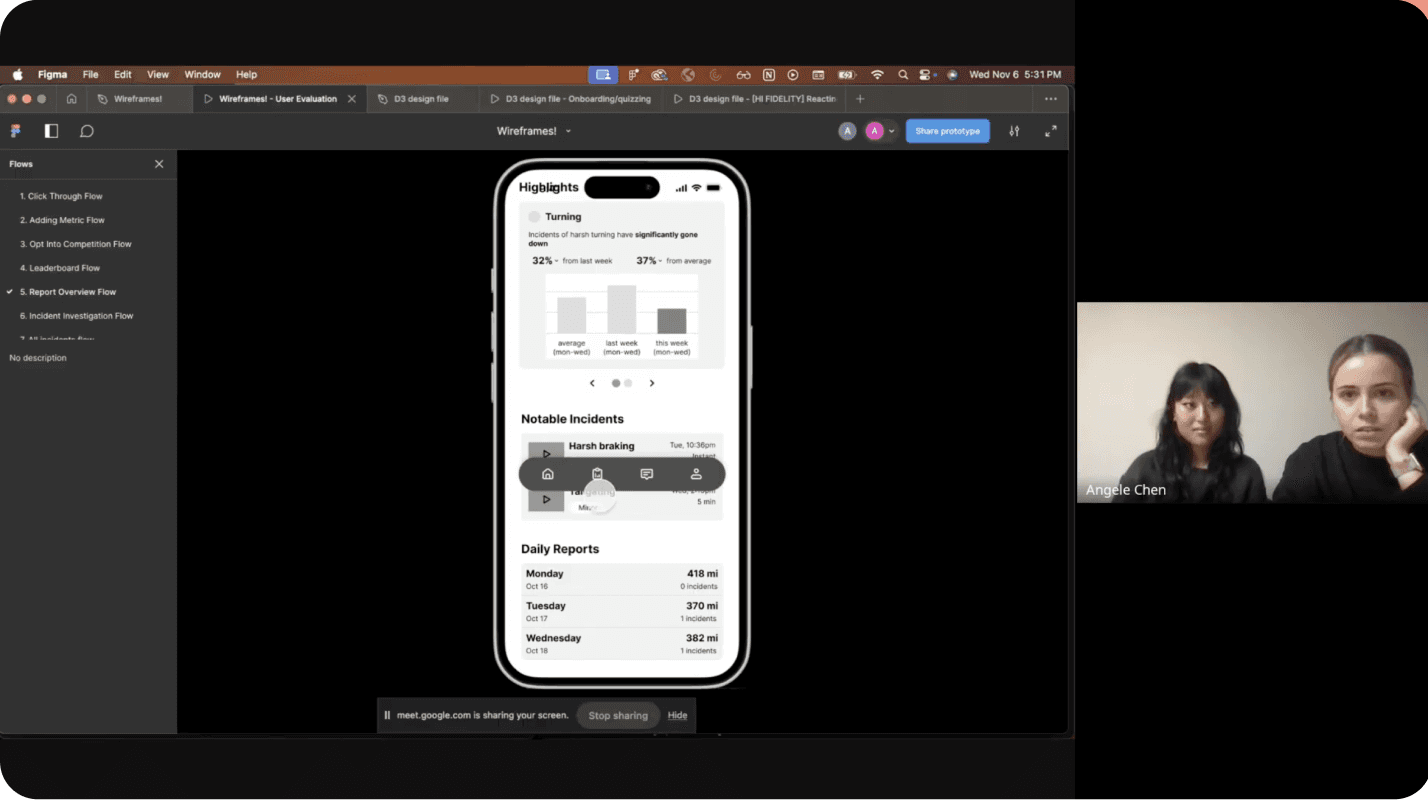
Wireframes were evaluated through user interviews with long-haul and delivery drivers, including a former driver coach, using guided task flows and feature-level questions to assess usability and overall fit.
Wireframes were evaluated through user interviews with long-haul and delivery drivers, including a former driver coach, using guided task flows and feature-level questions to assess usability and overall fit.
Wireframes were evaluated through user interviews with long-haul and delivery drivers, including a former driver coach, using guided task flows and feature-level questions to assess usability and overall fit.
EMPHASIZE POSITIVES MORE
EMPHASIZE POSITIVES MORE
Change the language of exoneration to remove implicit feelings of fault from driver
Provide more context to users reviewing an incident
Highlight increases in positive driving habits
Change the language of exoneration to remove implicit feelings of fault from driver
Provide more context to users reviewing an incident
Highlight increases in positive driving habits
PROMOTE DASHBOARD CUSTOMIZATION
PROMOTE DASHBOARD CUSTOMIZATION
Tailor the system to automatically respond to driver coaching goals
Show rankings for different metrics based on their relevance to the driver
Tailor the system to automatically respond to driver coaching goals
Show rankings for different metrics based on their relevance to the driver
EMPHASIZE ACCESSIBILITY
EMPHASIZE ACCESSIBILITY
Increase minimum font size
Make clickable entries, such as safety score, more clearly clickable
Increase minimum font size
Make clickable entries, such as safety score, more clearly clickable
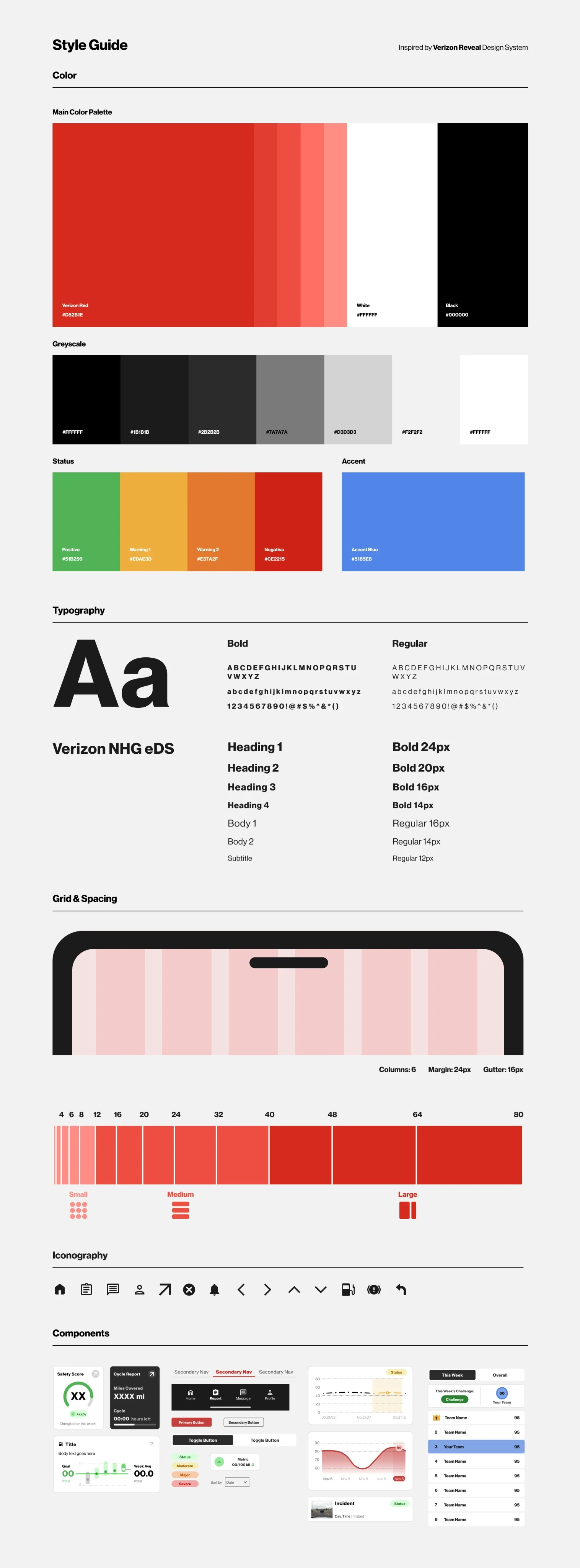
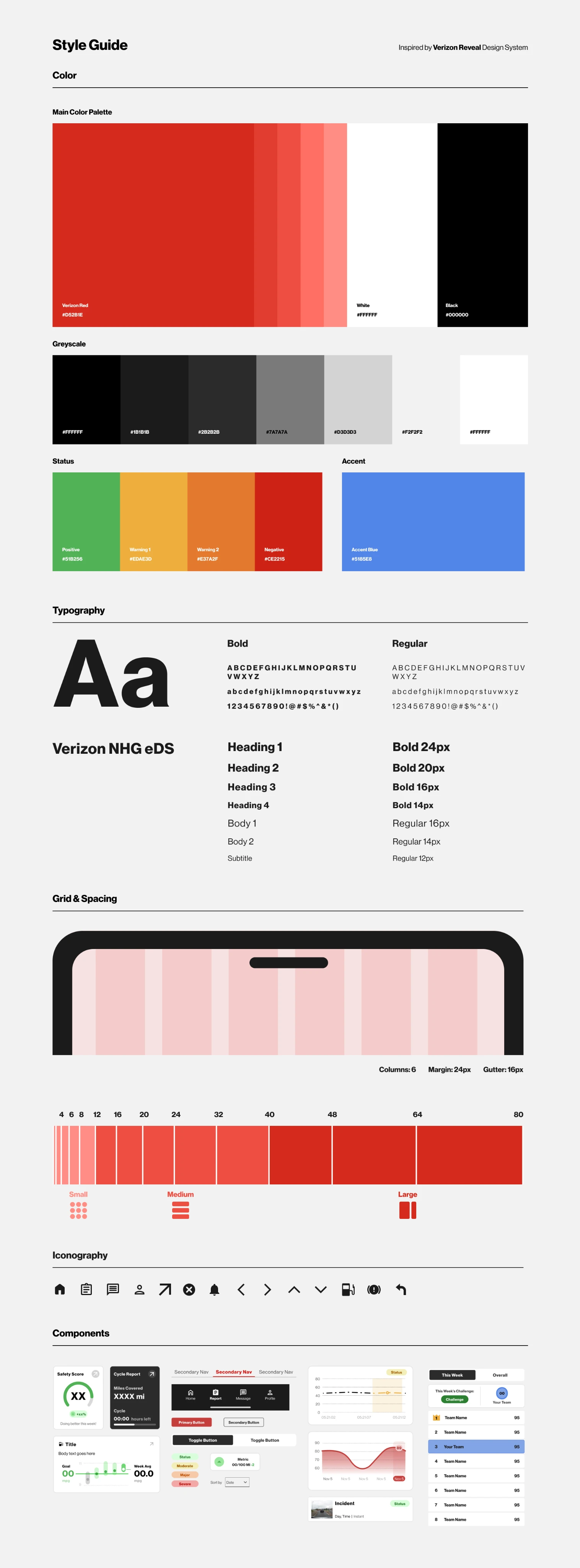
Design System
final prototype
key features
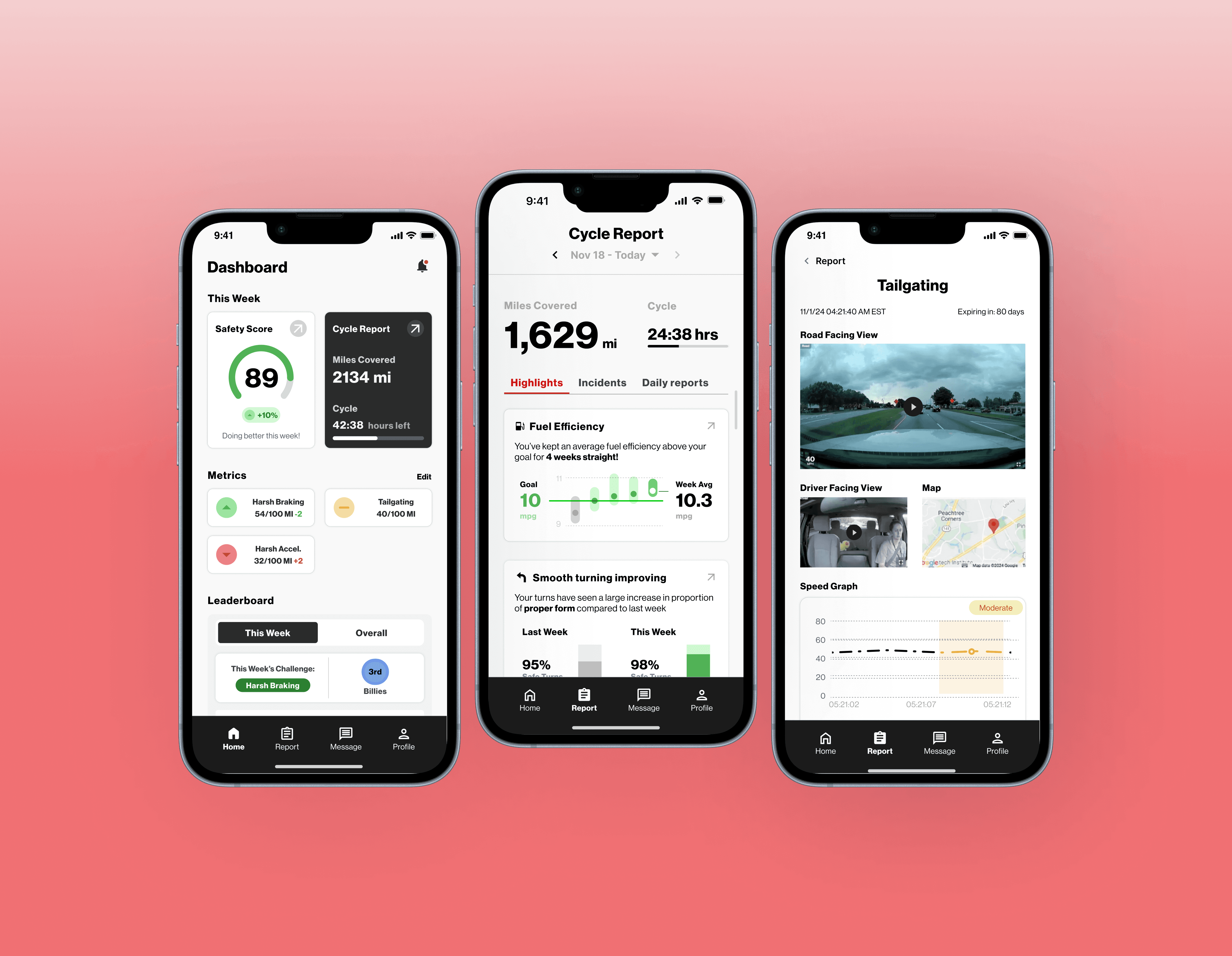
Dashboard
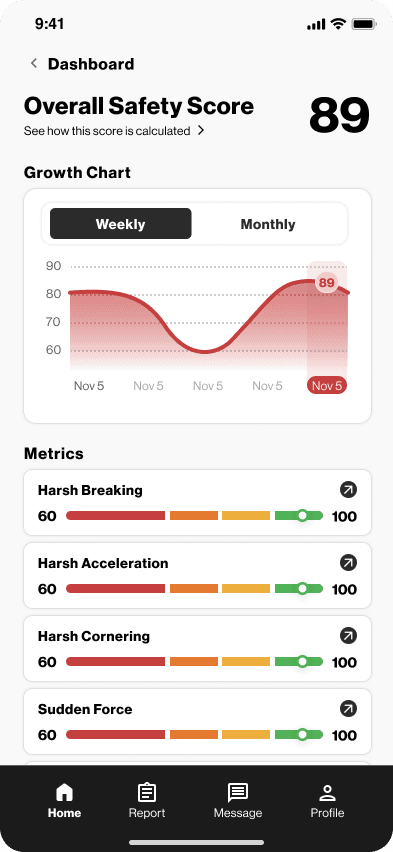
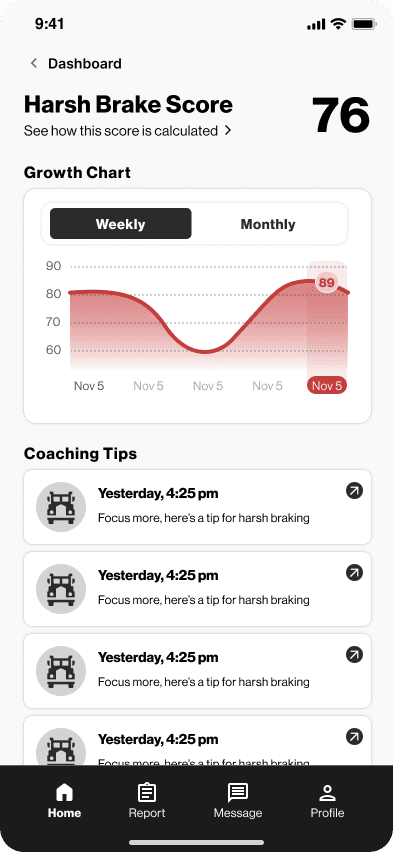
A customizable overview of driving performance centered around a transparent safety score. Drivers can track progress over time, see which behaviors impact their score, and access coaching tips tied to specific metrics.
DR1- Transparent in Data
DR1- Transparent in Data
How data is measured is presented visually and clearly to user
How data is measured is presented visually and clearly to user
DR2 - Data Reliability
DR2 - Data Reliability
Data is updated consistently and can be clarified based on user input through the cycle report
Data is updated consistently and can be clarified based on user input through the cycle report
DR3 - Reward good driving
DR3 - Reward good driving
Visualizations emphasize improvement and changes from previous units of time
Visualizations emphasize improvement and changes from previous units of time
DR4 - Update non-intrusively
DR4 - Update non-intrusively
User can read at any time and is not forced to interact
User can read at any time and is not forced to interact


Leaderboard
A team-based challenge that encourages safe driving through friendly competition. Weekly focus areas and rewards help reinforce positive habits without framing coaching as punitive.
DR1- Transparent in Data
DR1- Transparent in Data
Users are clearly informed what data is being measured for the leaderboard
Users are clearly informed what data is being measured for the leaderboard
DR3 - Reward good driving
DR3 - Reward good driving
Top ranked teams get financial or other real-world rewards for maintaining good drivers
Top ranked teams get financial or other real-world rewards for maintaining good drivers
DR4 - Update non-intrusively
DR4 - Update non-intrusively
Drivers can see leaderboard changes at any time
Drivers can see leaderboard changes at any time
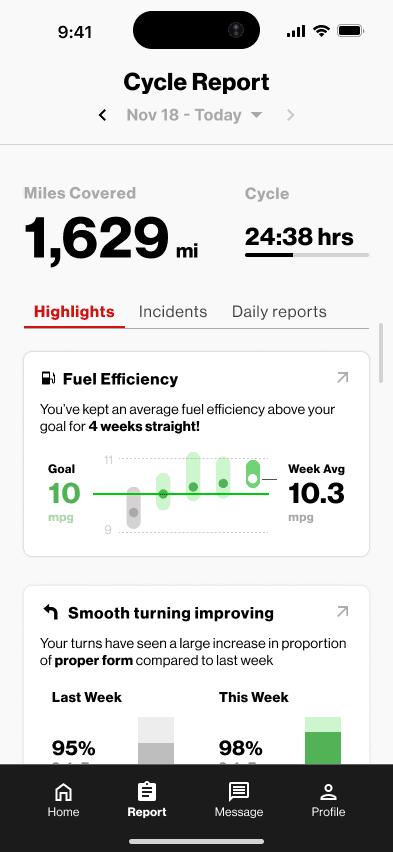
Cycle Report
A weekly summary of driving activity, highlighting key behaviors and incidents. Information is always accessible, allowing drivers to reflect without interrupting their workday.
DR1- Transparent in Data
DR1- Transparent in Data
All driving data is investigable, with easily accessible videos for incidents
All driving data is investigable, with easily accessible videos for incidents
DR2 - Data Reliability
DR2 - Data Reliability
Incidents are freely available to investigate and drivers can add additional context when necessary
Incidents are freely available to investigate and drivers can add additional context when necessary
DR3 - Reward good driving
DR3 - Reward good driving
Celebrates improvements in driving through easily scannable highlights
Celebrates improvements in driving through easily scannable highlights
DR4 - Update non-intrusively
DR4 - Update non-intrusively
Only alerts driver at the end of their cycle when they are done driving
Only alerts driver at the end of their cycle when they are done driving

Overall Findings
Transparency in Data Collection
Transparency in Data Collection
Drivers value transparency regarding the metrics being tracked and how they influence their performance scores. Clearly presenting this information builds trust and encourages engagement.
Drivers value transparency regarding the metrics being tracked and how they influence their performance scores. Clearly presenting this information builds trust and encourages engagement.
Empowering Drivers with Feedback
Empowering Drivers with Feedback
Feedback should be placed in the hands of the driver, allowing them to access and interpret their data independently. Customizable features can help drivers tailor the app to their individual needs and goals.
Feedback should be placed in the hands of the driver, allowing them to access and interpret their data independently. Customizable features can help drivers tailor the app to their individual needs and goals.
Positive Coaching Approach
Positive Coaching Approach
Coaching should emphasize positive reinforcement and improvement rather than focusing solely on mistakes. Encouraging progress through supportive feedback motivates drivers to engage with the system.
Coaching should emphasize positive reinforcement and improvement rather than focusing solely on mistakes. Encouraging progress through supportive feedback motivates drivers to engage with the system.
Ease of Use and Schedule Alignment
Ease of Use and Schedule Alignment
The system needs to be intuitive and seamlessly integrate into a driver’s typical schedule, minimizing disruption to their workflow while providing accessible and actionable insights.
The system needs to be intuitive and seamlessly integrate into a driver’s typical schedule, minimizing disruption to their workflow while providing accessible and actionable insights.
REFLECTION
Lessons Learned
Lessons Learned
Lessons Learned
Importance of clear coordination and task distribution
How to conduct effective research methods
Importance of clear coordination and task distribution
How to conduct effective research methods
Challenges Experienced
Challenges Experienced
Challenges Experienced
Finding interview participants in line with our target user was difficult
Coordinating different feature functionalities was difficult
Finding interview participants in line with our target user was difficult
Coordinating different feature functionalities was difficult
What could've been done different
What could've been done different
What could've been done different
Clearer information architecture earlier in the process to guide our cross-feature prototyping
More robust surveys
Further fleshing out key features
Clearer information architecture earlier in the process to guide our cross-feature prototyping
More robust surveys
Further fleshing out key features
What Went Well
What Went Well
What Went Well
Excellent team collaboration! Weaknesses felt compensated by others’ strengths
Consistently good communication with our client
Drivers had strong positive reaction to our design
Excellent team collaboration! Weaknesses felt compensated by others’ strengths
Consistently good communication with our client
Drivers had strong positive reaction to our design
final prototype
key features
Dashboard
A customizable overview of driving performance centered around a transparent safety score. Drivers can track progress over time, see which behaviors impact their score, and access coaching tips tied to specific metrics.
DR1- Transparent in Data
How data is measured is presented visually and clearly to user
DR2 - Data Reliability
Data is updated consistently and can be clarified based on user input through the cycle report
DR3 - Reward good driving
Visualizations emphasize improvement and changes from previous units of time
DR4 - Update non-intrusively
User can read at any time and is not forced to interact
Leaderboard
A team-based challenge that encourages safe driving through friendly competition. Weekly focus areas and rewards help reinforce positive habits without framing coaching as punitive.
DR1- Transparent in Data
Users are clearly informed what data is being measured for the leaderboard
DR3 - Reward good driving
Top ranked teams get financial or other real-world rewards for maintaining good drivers
DR4 - Update non-intrusively
Drivers can see leaderboard changes at any time
Cycle Report
A weekly summary of driving activity, highlighting key behaviors and incidents. Information is always accessible, allowing drivers to reflect without interrupting their workday.
DR1- Transparent in Data
All driving data is investigable, with easily accessible videos for incidents
DR2 - Data Reliability
Incidents are freely available to investigate and drivers can add additional context when necessary
DR3 - Reward good driving
Celebrates improvements in driving through easily scannable highlights
DR4 - Update non-intrusively
Only alerts driver at the end of their cycle when they are done driving
Overall Findings
Transparency in Data Collection
Drivers value transparency regarding the metrics being tracked and how they influence their performance scores. Clearly presenting this information builds trust and encourages engagement.
Empowering Drivers with Feedback
Feedback should be placed in the hands of the driver, allowing them to access and interpret their data independently. Customizable features can help drivers tailor the app to their individual needs and goals.
Positive Coaching Approach
Coaching should emphasize positive reinforcement and improvement rather than focusing solely on mistakes. Encouraging progress through supportive feedback motivates drivers to engage with the system.
Ease of Use and Schedule Alignment
The system needs to be intuitive and seamlessly integrate into a driver’s typical schedule, minimizing disruption to their workflow while providing accessible and actionable insights.
EMPHASIZE POSITIVES MORE
Change the language of exoneration to remove implicit feelings of fault from driver
Provide more context to users reviewing an incident
Highlight increases in positive driving habits
PROMOTE DASHBOARD CUSTOMIZATION
Tailor the system to automatically respond to driver coaching goals
Show rankings for different metrics based on their relevance to the driver
EMPHASIZE ACCESSABILITY
Increase minimum font size
Make clickable entries, such as safety score, more clearly clickable
Let’s build something meaningful
Ready when you are.
Let's
Create
Explore
Discover
Design
Work
Create
together.
Let’s build something meaningful
linkedin.com/in/jessica-g-herring